


Buy⚔️ for a gift and for collecting Caucasian dagger, the first half of the twentieth century (Dagestan?) in Ukraine city of Kiev
Dear Collectors and guests of the site Antique Gallery, looking for a gift, in particular Antique weapons, your attention is invited:
Caucasian dagger, first half of the twentieth century (Dagestan?)
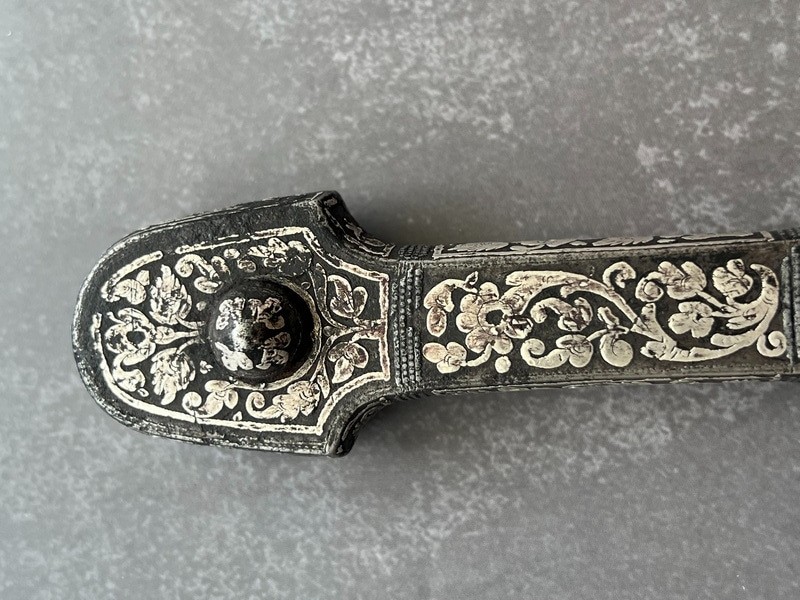
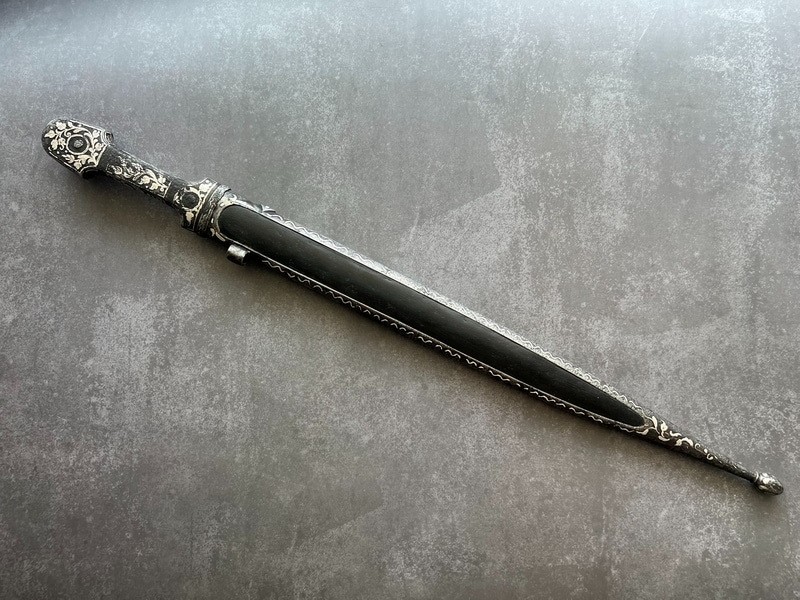
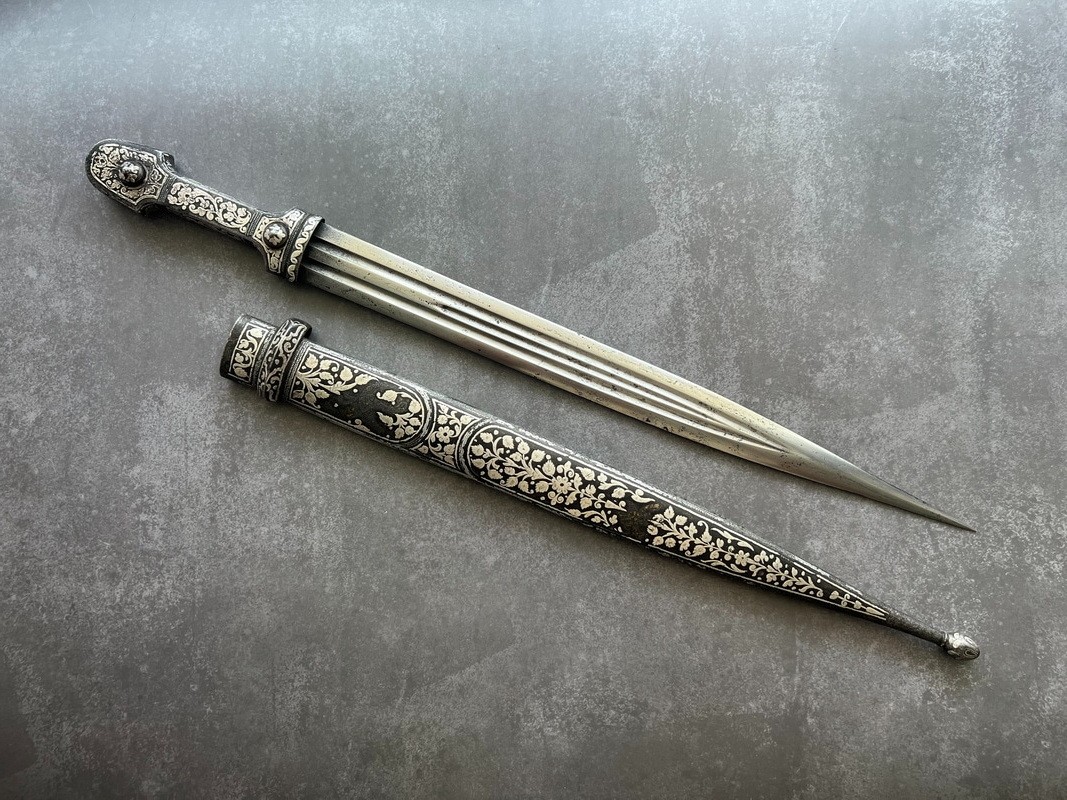
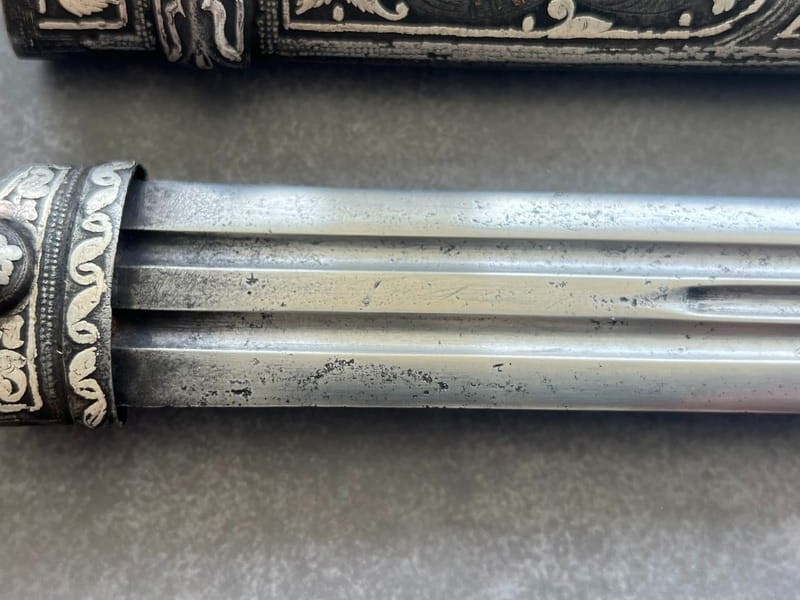
The tradition of this craft school has Dagestani roots, but due to the spread of Dagestani masters throughout the general territory , it is difficult to say where exactly the master worked, the options are different: Western Georgia, Azerbaijan, Vladikavkaz, etc. The tradition of this craft school has Dagestani roots, but due to the spread of Dagestani masters throughout the general territory, it is difficult to say where exactly the master worked. The blade is steel three-valve (qualitative-polished), the device is iron all-metal with silver notch.
The tradition of this craft school has Dagestani roots, but due to the spread of Dagestani masters throughout the general territory, it is difficult to say where exactly the master worked, the options are different: Western Georgia, Azerbaijan, Vladikavkaz, etc.
The tradition of silver incision comes from Dagestan, but over time this style lost its national features and became pan-Caucasian. The situation is similar with the blades: they have no clear Georgian or Amuzgi features. This is explained by the fact that Dagestani masters, due to high competition, worked all over the Caucasus and Transcaucasia, which led to a mixture of national traditions and styles. It is noted that the depth of the dolu at the top of the blade comes to naught, which is rare for early daggers. In addition, the lintel between the doles in the upper part of the blade was usually absent on daggers of the 19th and early 20th centuries.
Historical Background:
The Caucasian dagger is an important symbol of the culture and history of the peoples of the Caucasus. Daggers had a variety of purposes: they were used as weapons, tools and ritual objects. Made of high quality steel, daggers were known for their sharpness and durability.
Caucasian daggers often had intricate ornaments and engravings that reflected cultural motifs and religious symbols. Each design element had its own meaning and history, making each dagger unique. Silver was used not only for decorative elements, but also to create completely silver sheaths, which provided additional protection and emphasized the status of the owner.


Daggers decorated with silver were considered especially valuable and belonged to representatives of the upper classes of society and were of great importance as symbols of status and power. In the 20s and 30s of the twentieth century, Caucasian masters reached a high level of metalworking and engraving, creating real works of art. The dagger has a high-quality steel blade 25-40 cm long, with double-sided sharpening. The silver finish added not only beauty but also additional value to the daggers.

Today, such daggers are valuable collector’s items reflecting the rich history and cultural heritage of the Caucasus. They not only testify to the skill of their makers, but also to the historical events and traditions they experienced. This Caucasian dagger is a fine example of the art and craftsmanship of the time.

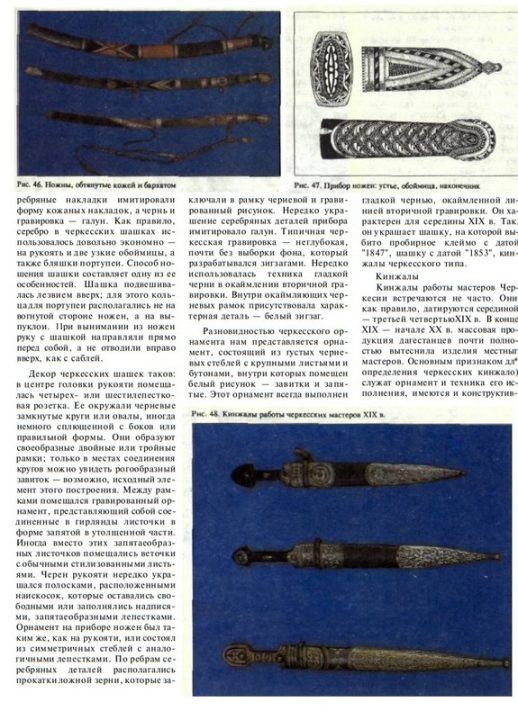


More information about Caucasian daggers at the link:
Photo Review:









| Collection | |
|---|---|
| by dating | |
| by country and region | |
| by type | |
| by type of troops |
Add a review
Be the first to review “Caucasian dagger, first half of the twentieth century (Dagestan?)”
Related products
-
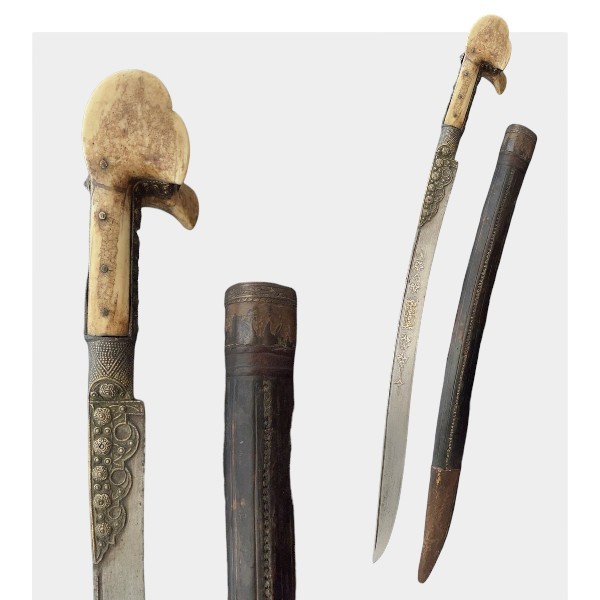
Yatagan of the Ottoman Empire with the inscription: “O Muhammad, be my assistant.” 1824
Original price was: 4,250 $.3,749 $Current price is: 3,749 $.









Updating…
There are no reviews yet.