

Original short description + Go to the photo albumPhotos of the lot on offer are at the very bottom

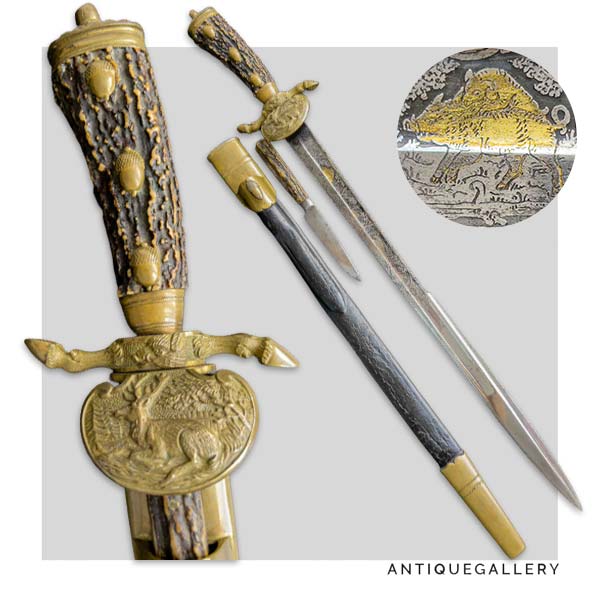
Hirschfänger Hunting Dagger 19th Century Germany
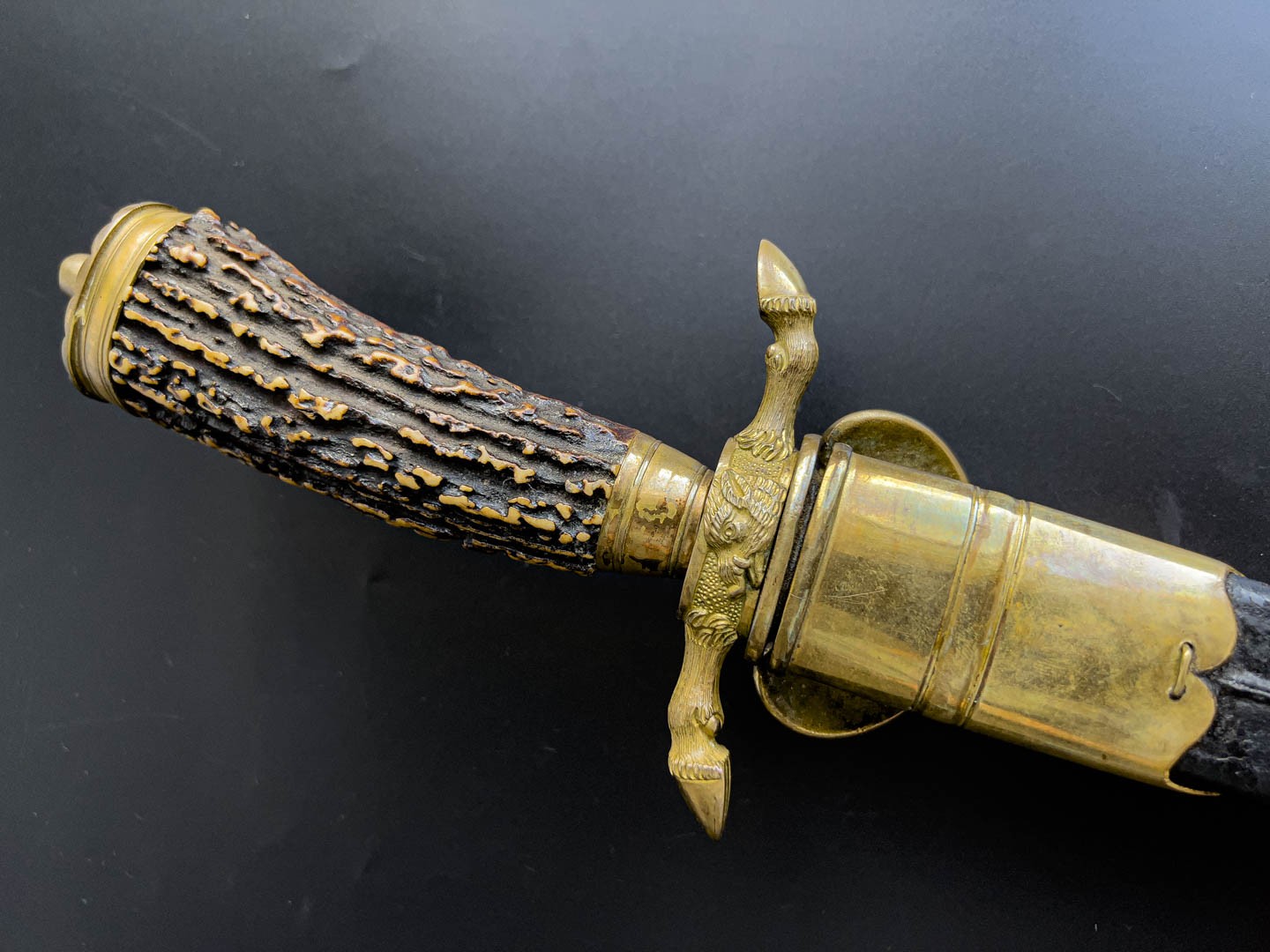
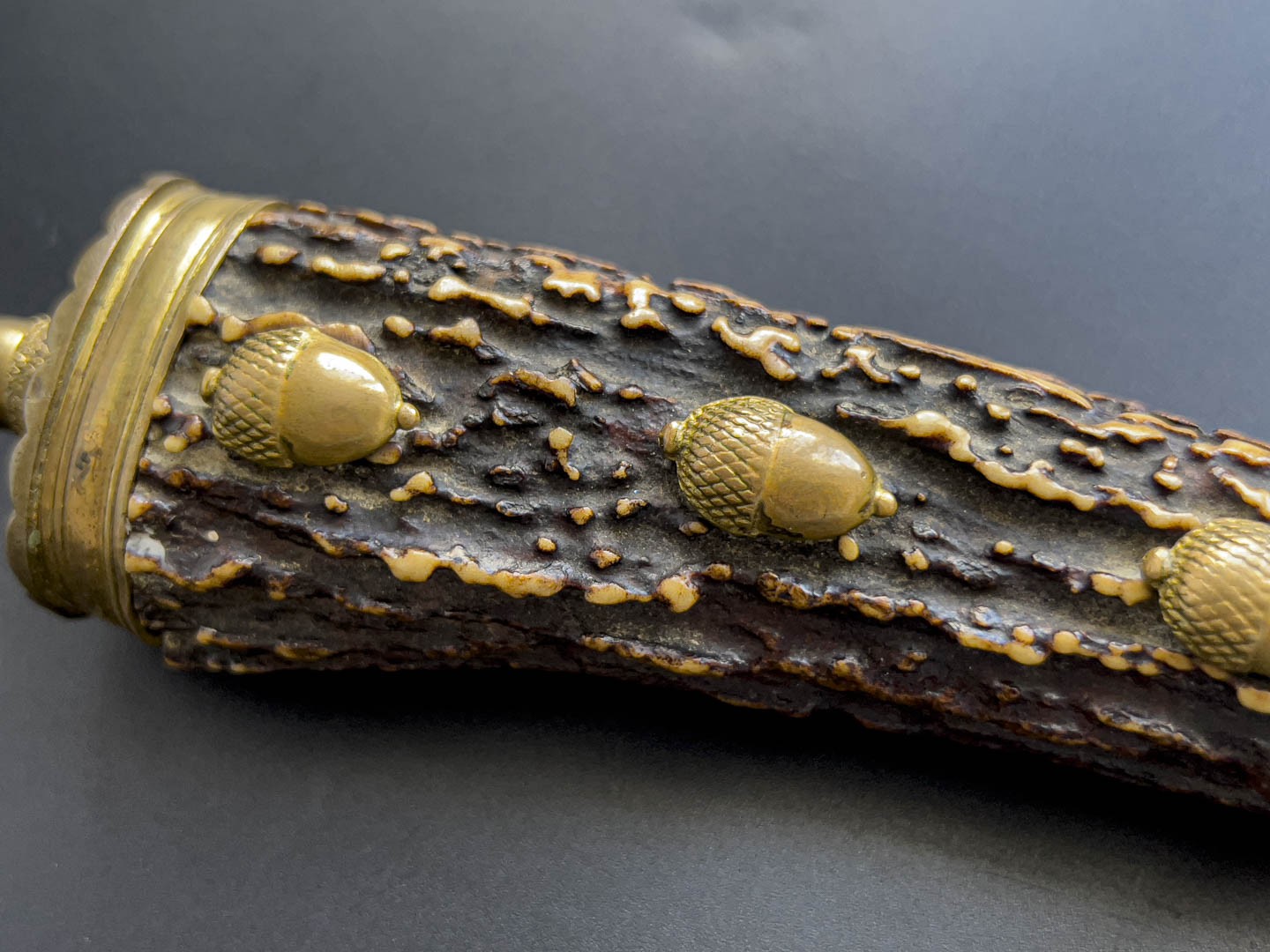
The handle of the dagger is made of horn and is attached to the blade’s tang using a hidden method. It features three convex overlays shaped like acorns. The pommel is steel, oval, flat, and adorned with a decorative screw resembling an acorn. The crossguard is designed to look like stylized hooves pointing in opposite directions, with an elegantly crafted wild boar’s head positioned at the center of the crossguard on both sides. A decorative shield is affixed to the front of the crossguard, depicting a deer.
Unique Custom Blade!
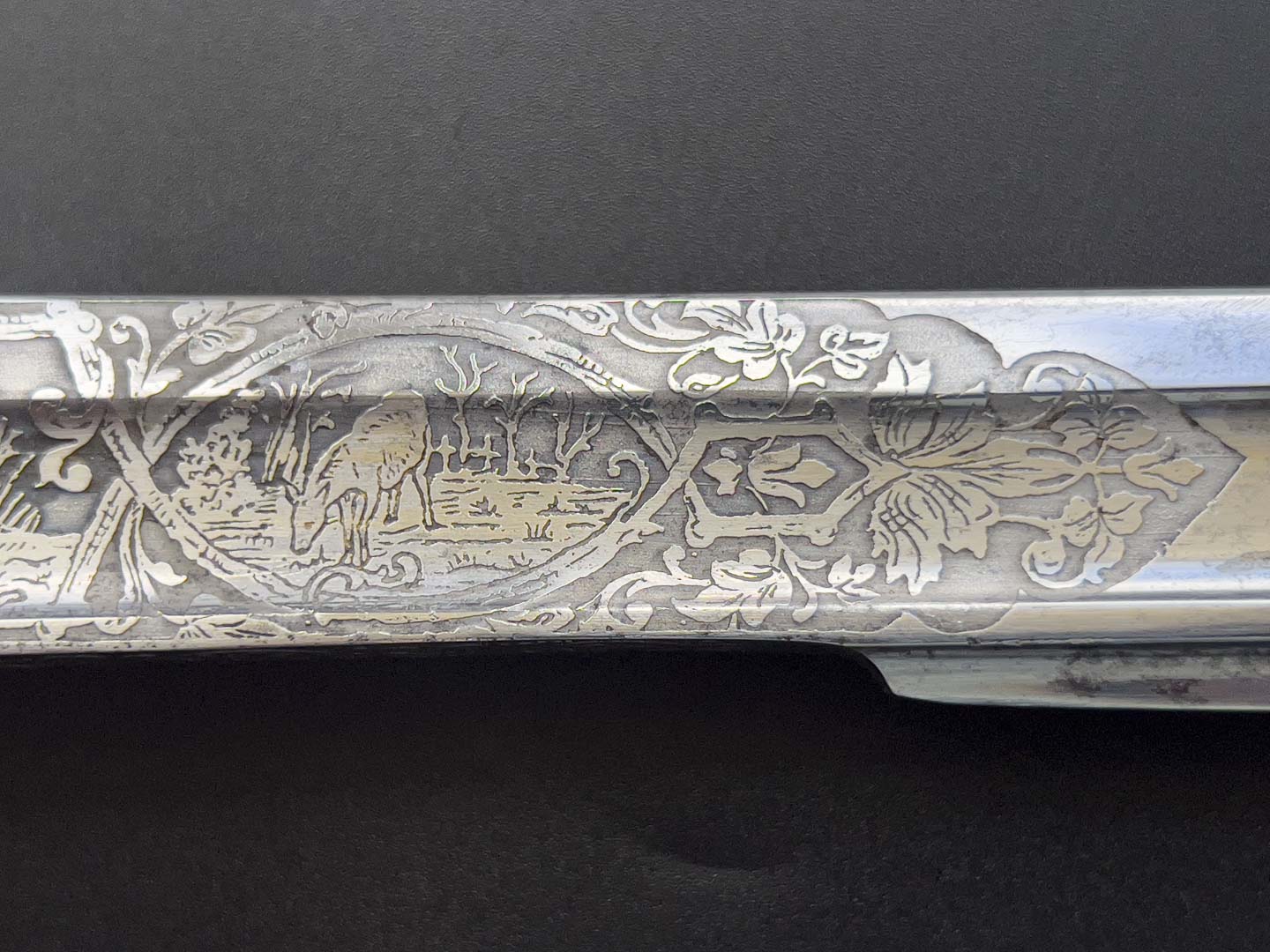
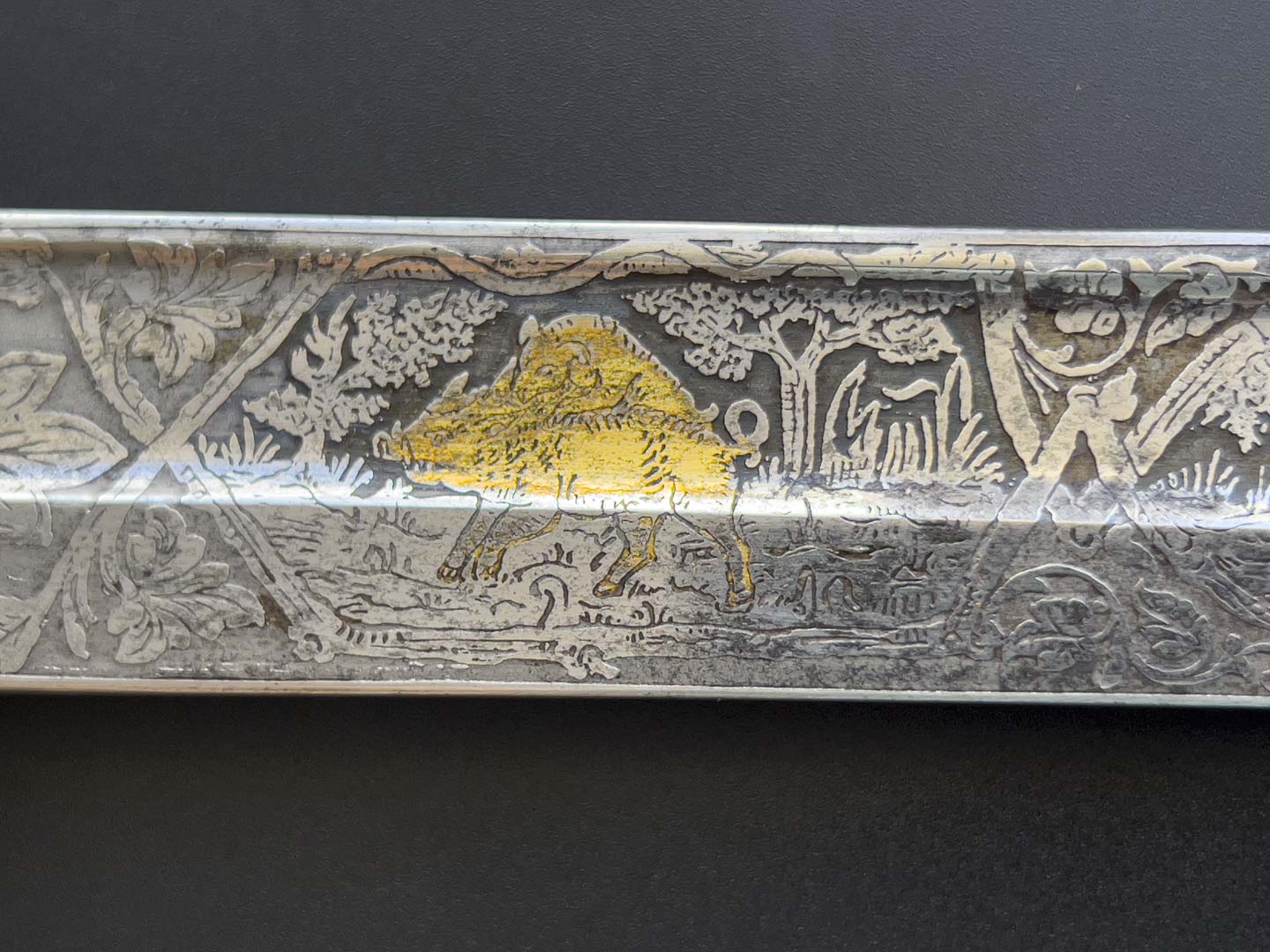
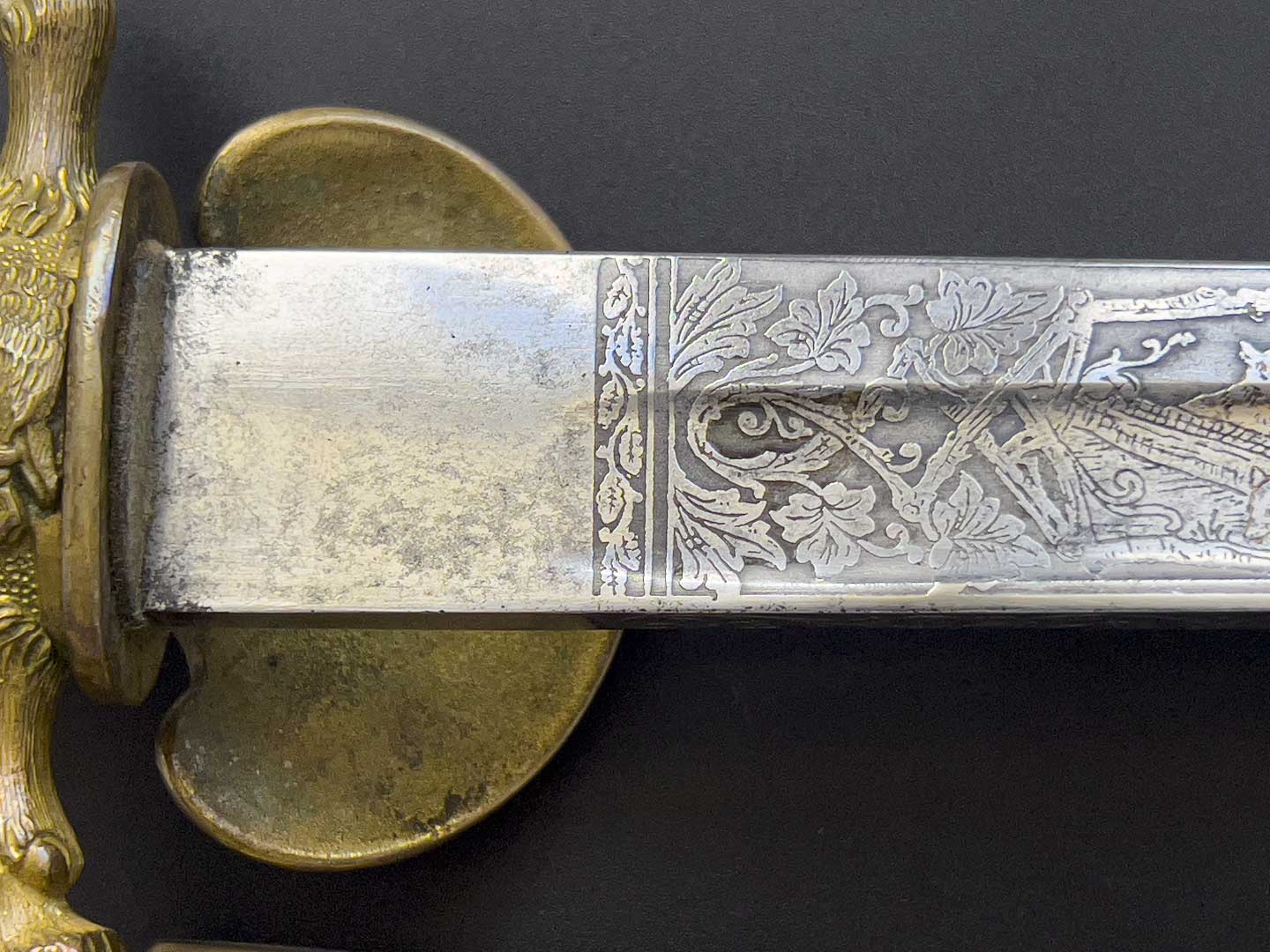
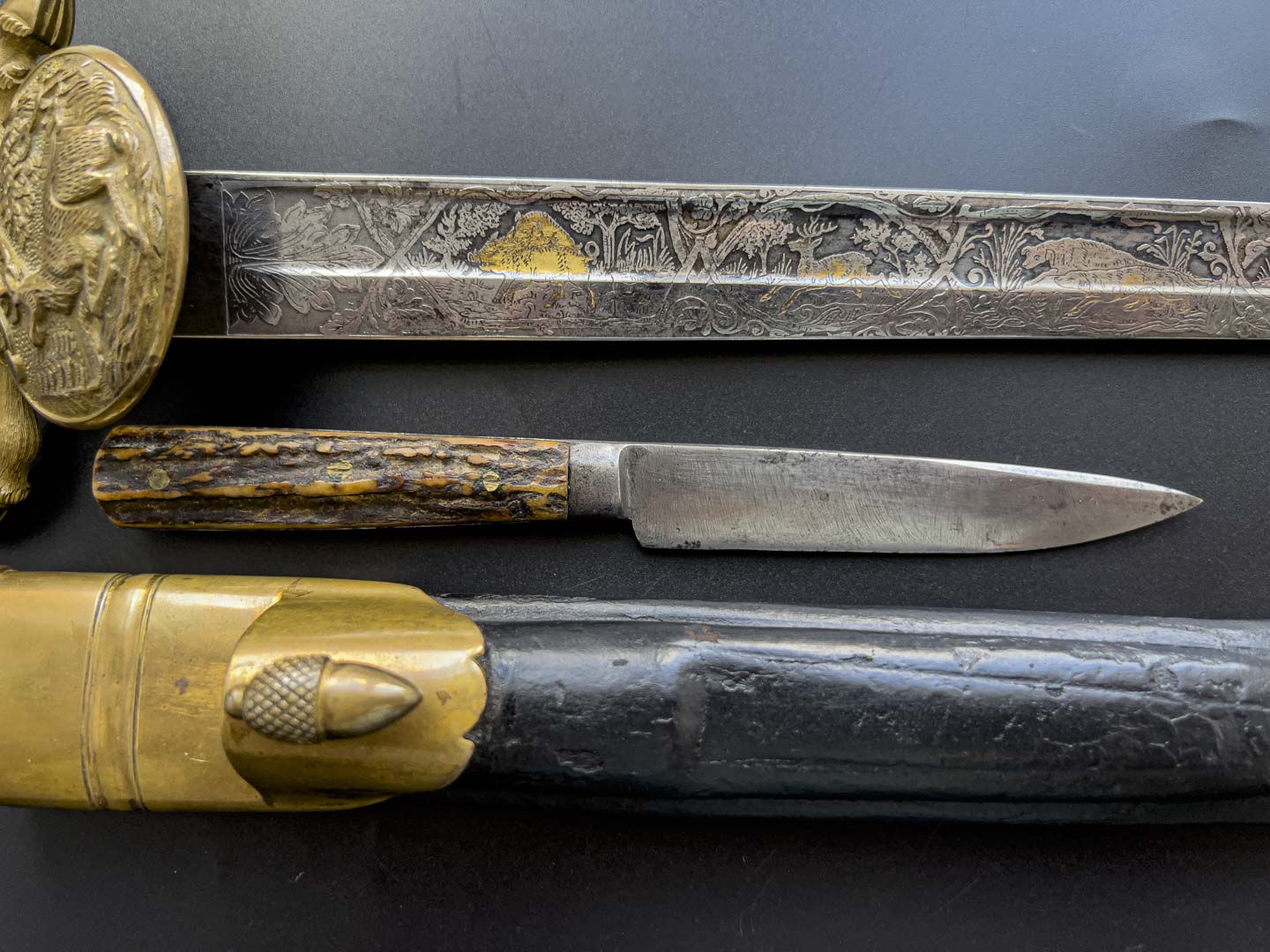
The blade is made of steel, wide and straight, embellished on both sides with etched patterns that include gilded elements related to hunting. It features a broad fuller and a yelman extending halfway down the blade.
The scabbard is wooden, covered in dark leather, with a steel fitting that includes a throat with an acorn-shaped finial and a tip. An additional compartment for a small skinner knife is attached to the throat.
Historical Note
The rich hunting traditions of Germany manifested in a unique type of cold weapon known as the Hirschfänger, or hunting dagger. The Hirschfänger emerged during the Baroque and Rococo periods, when parforce hunting reached its peak popularity and grandeur in France. Parforce hunting (from the French “parforce” meaning “by force”) involves horseback hunting with hounds for foxes, deer, wild boar, and other game, continuing until the pursued animal is exhausted and caught by the dogs or taken by the hunter. At this moment, one of the hunters would deliver a fatal blow to the animal with the Hirschfänger, known as the “mercy stroke” (Coup de Grâce), directing the blade’s point beneath the shoulder blade; this same blow would also pierce the heart through the ribcage. During this “ceremony,” other hunters would shout “Halali!” The meaning of this word is unknown, but it may derive from the Turkish “Halal,” meaning “Peace to its ashes.”
Despite its French origins, this weapon became known as the Hirschfänger. The German word “hirschfänger” translates to “deer catcher,” indicating it was a cold weapon used by hunters of large game, with deer hunting always regarded as the most prestigious—royal.
Since the 18th century, Hirschfängers became an essential part of hunting uniforms in many European countries, particularly in German states and neighboring regions. This fashion even reached the Russian Empire, where production was established not only by private craftsmen but also at the state arms factory in Zlatoust. Such hunting daggers became a long-lasting part of the formal attire not only in France, Austria, and Germany but also in Russia, adorning the uniforms of the courtiers in the imperial hunting parties.
The dagger acquired special symbolism, indicating the owner’s status within the hunting community. Thus, every Hirschfänger was a work of art with specific attributes and distinguishing features. In the home of a forester or gamekeeper, it held a place of honor and was passed down from father to son. After finishing, the craftsmen transformed the dagger into a true masterpiece, where memorable hunting scenes could be depicted on the blade.
Go to the top of the ad









Add a review
Be the first to review “Hirschfänger Hunting Dagger 19th Century Germany”
Related products
-

-
-

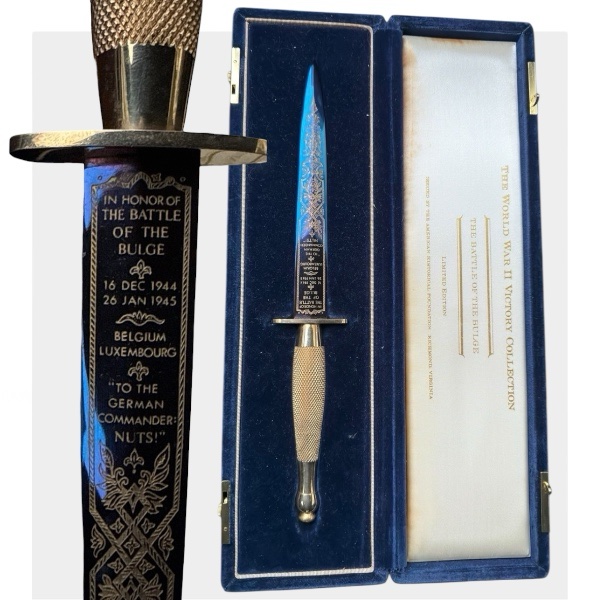
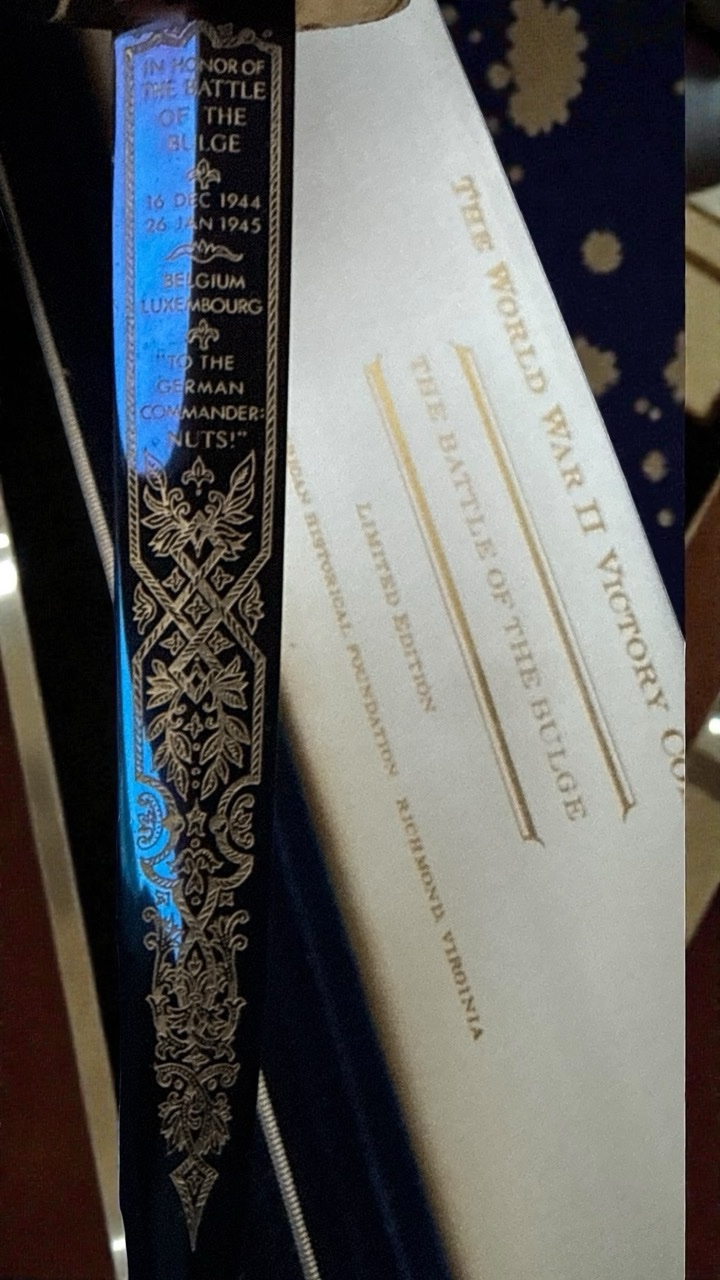
Коллекционный Кинжал Fairbairn-Sykes «Battle of the Bulge»
Original price was: 2,000 $.1,999 $Current price is: 1,999 $.



Updating…
There are no reviews yet.