


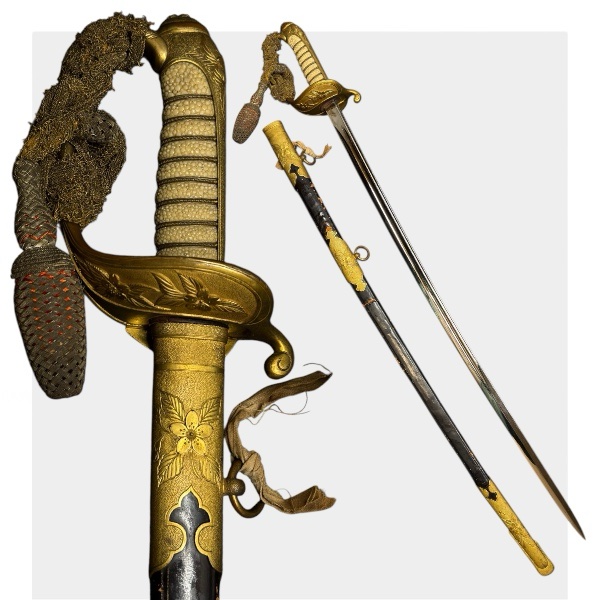


Japanese Naval Parade Sword of 1883
Out of stock
Japanese Naval Parade Sword of 1883
Brief Information
| Characteristic | Value |
|---|---|
| Date | 1883–1914 (Meiji period) |
| Country | Japan |
| Type of Weapon | Naval parade sword (kai-gunto) |
| Purpose | Ceremonial cold weapon for naval officers |
| Blade Material | Chromed steel |
| Fitting Material | Gilded brass |
Manufacturer
Manufactured by Japanese state arsenals and private workshops under the order of the Japanese Navy Ministry. Production was conducted under strict supervision of the naval authority, adhering to approved standards.
Description
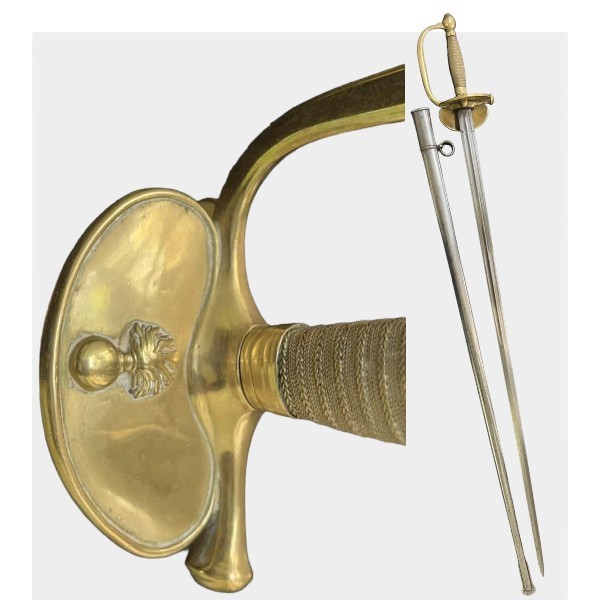
The Japanese naval parade sword of 1883 belongs to the lighter variants of the naval kai-gunto, which were carried by officers of all ranks and midshipmen of the Imperial Japanese Navy. This weapon features a full-sized naval blade.
Technical Specifications (Approximate)
| Parameter | Size |
|---|---|
| Blade Length | 610–660 mm |
| Handle Length (with guard) | 122 mm |
| Total Length in Scabbard | 813 mm |
| Maximum Blade Width | 19 mm |
| Sword Weight in Scabbard | 25 ounces (≈708 g) |
Structural Elements
Blade
The chromed steel blade was produced in two variants:
- Standard — with a smooth polish without additional decoration
- Decorative — with an engraved edge resembling a hardened edge (yakiba)
The blade has the characteristic shape of a naval kai-gunto with a slight curve and is sharpened on one side.
Handle
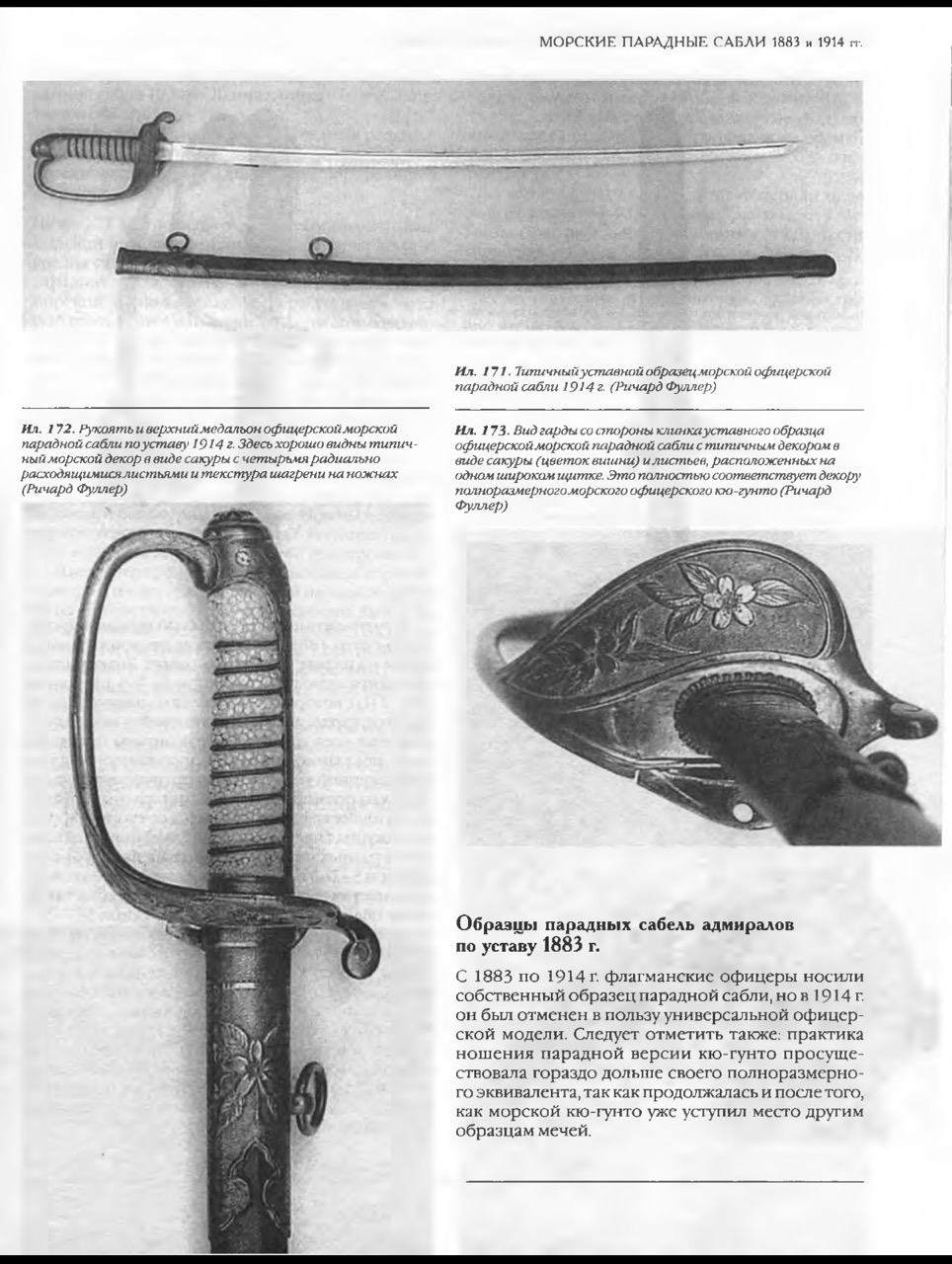
The handle fitting is made of gilded brass. The handle is covered with white stingray skin with a traditional wrapping of copper or brass wire in alternating grooves. This technique provides a secure grip and gives the weapon a ceremonial appearance.
The sword is secured in the scabbard by a small folding flap on the back of the guard, which connects with a pin on the upper medallion of the scabbard.
Guard
The guard is adorned with a relief depiction of cherry blossom flowers and leaves — a traditional decorative motif of the naval kyu-gunto from 1914. The openwork part of the guard consists of two differently sized panels, with the larger one depicting kiri (5–7–5 kadōsakura) and the smaller one featuring a single flower of kadōsakura.
The decoration includes:
- Stylized chrysanthemum flowers
- Cherry blossom leaves and petals
- Relief engraving using etching technique
Scabbard
The scabbard is covered with black leather or shagreen, treated with brown or black lacquer, in this case, shagreen covered with black lacquer.
The scabbard features:
- Brass habaki (collar at the base of the blade)
- Decorative fittings for suspension
A standard sword retention system was used — a folding flap on the guard and a pin on the upper medallion of the scabbard.
Interesting Facts
- 🔹 The first samples of the naval kai-gunto of 1883 were intended to supplement the army parade swords of senior officers, ship’s seniors, and midshipmen. This was due to the reorganization of the Japanese Navy.
- 🔹 From 1883 to 1914, flamand officers carried their own model of parade sword, which was discontinued only in 1914 in favor of a universal officer model.
- 🔹 An unidentified Japanese reference book includes an illustration of a similar parade sword without surrounding anchor leaves and without rings on the anchor. This suggests the existence of simplified variants for different ranks.
- 🔹 On October 3, 1919, seniors lost the right to use their own sword model, and midshipmen (and ship’s seniors) began to carry the officer model.
Historical Context
Meiji Period and Naval Modernization
Naval parade swords are lighter variants of full-sized naval kyu-gunto from 1883 and 1914. Officers of all ranks were required to carry them during parades, ceremonies, and official events.
Due to the specifics of naval service, officers rarely used full-sized weapons in their daily activities. The parade sword primarily held ceremonial and status significance.
Design Evolution
In the modernized version of 1883 for seniors, the following features were applied:
- Smooth fittings with a black handle
- Scabbard with fittings shaped like ropes
- A bar that connects with a pin on the medallion
- Solid guards without anchor motifs
Until 1914, this model continued to be used as a parade version of the sword by midshipmen and ship’s seniors. After 1914, a unified officer’s tassel of smaller size was introduced, consisting of:
- Smooth cords made of silver thread
- Sliding tassels
- A knot in the shape of a button
Social Aspect
Attaining an officer rank in the navy involved significant financial expenses. An officer was required to acquire:
- Full dress uniform
- Parade sword
- Naval dagger
- Other equipment elements
This made the officer corps socially homogeneous and emphasized the elitism of naval service.
Use in the 20th Century
Parade swords were carried until the end of World War II, although the kai-gunto sword introduced in 1937 in traditional style did not have a parade version. Nevertheless, the production of parade swords continued at least until 1944, as they are still encountered quite frequently.
Go to the top of the ad


Add a review
Be the first to review “Japanese Naval Parade Sword of 1883”
Related products
-
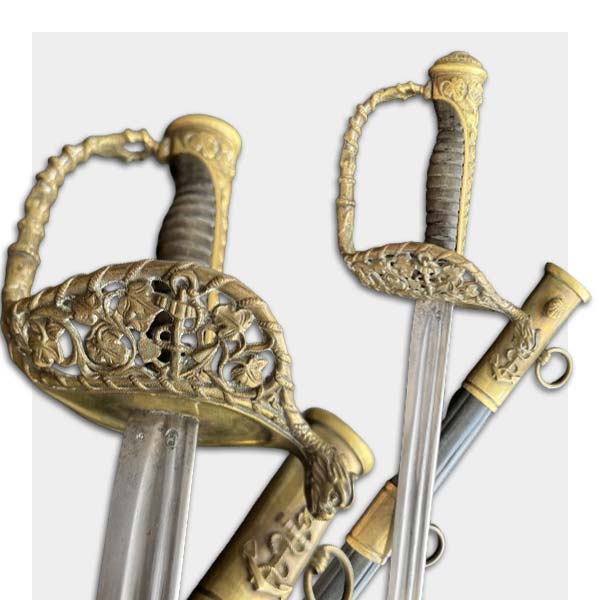
Sword for officers of all branches and administrations model 1872
Original price was: 620 $.600 $Current price is: 600 $.












Updating…
There are no reviews yet.