


Buy⚔️ for a gift and for collecting Russian officer’s naval dirk H2 CAR model 1803/1914 years in Ukraine, Kyiv city
Dear Collectors and guests of the site Antique Gallery, looking for a gift, in particular Antique weapons, to your attention is offered: Russian officer’s naval dirk H2 CAR sample 1803/1914 years old
⚓ The Russian officer’s naval dirk H2 CAR of 1803/1914 is an exceptional example of a ceremonial weapon of the Russian Empire, which reflects the naval tradition and craftsmanship of the imperial era. This dirk was part of the ceremonial equipment of naval officers who served on ships of the Imperial Navy. Its elegant design and symbolism make it a valuable addition to any collection of antique weapons, especially for those interested in the military history of tsarist Russia. Purchase this unique artifact and it will become the centerpiece of your collection ?️.
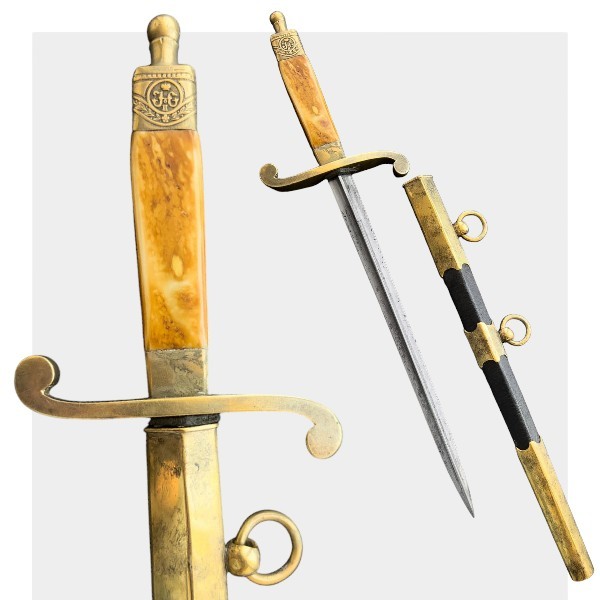
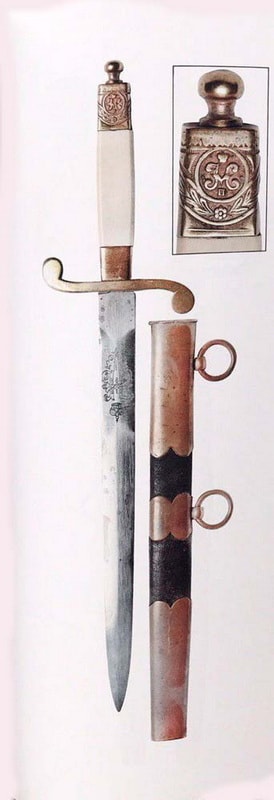
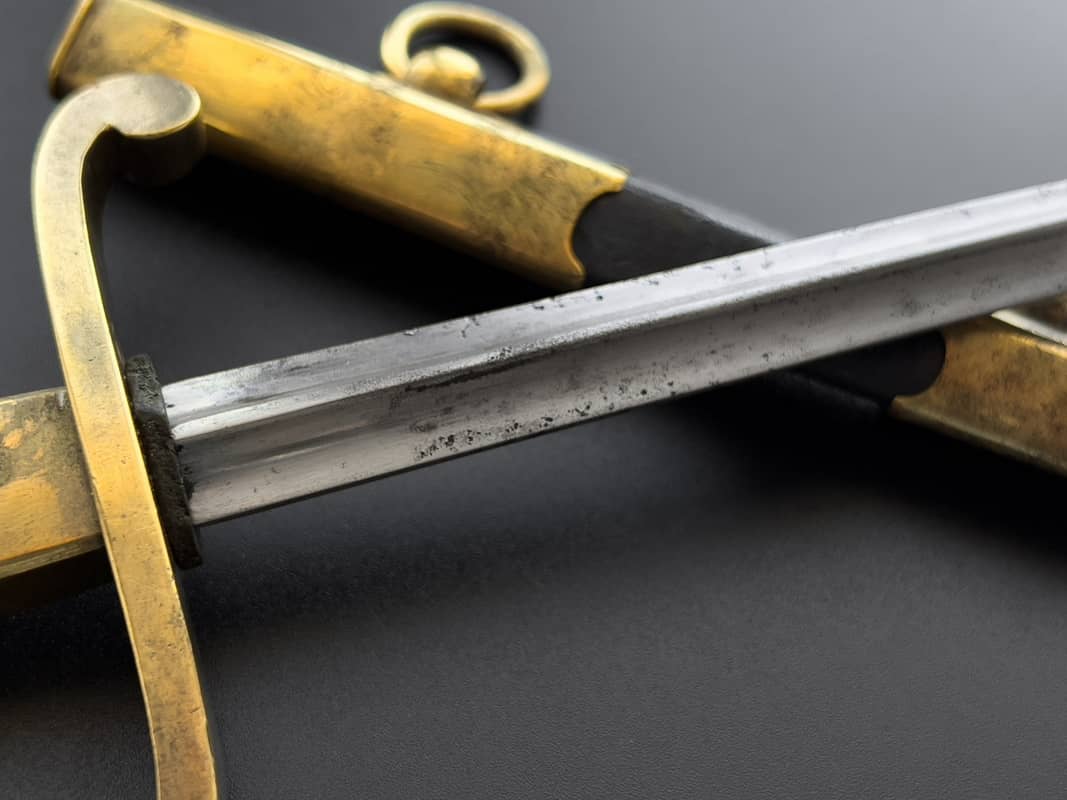
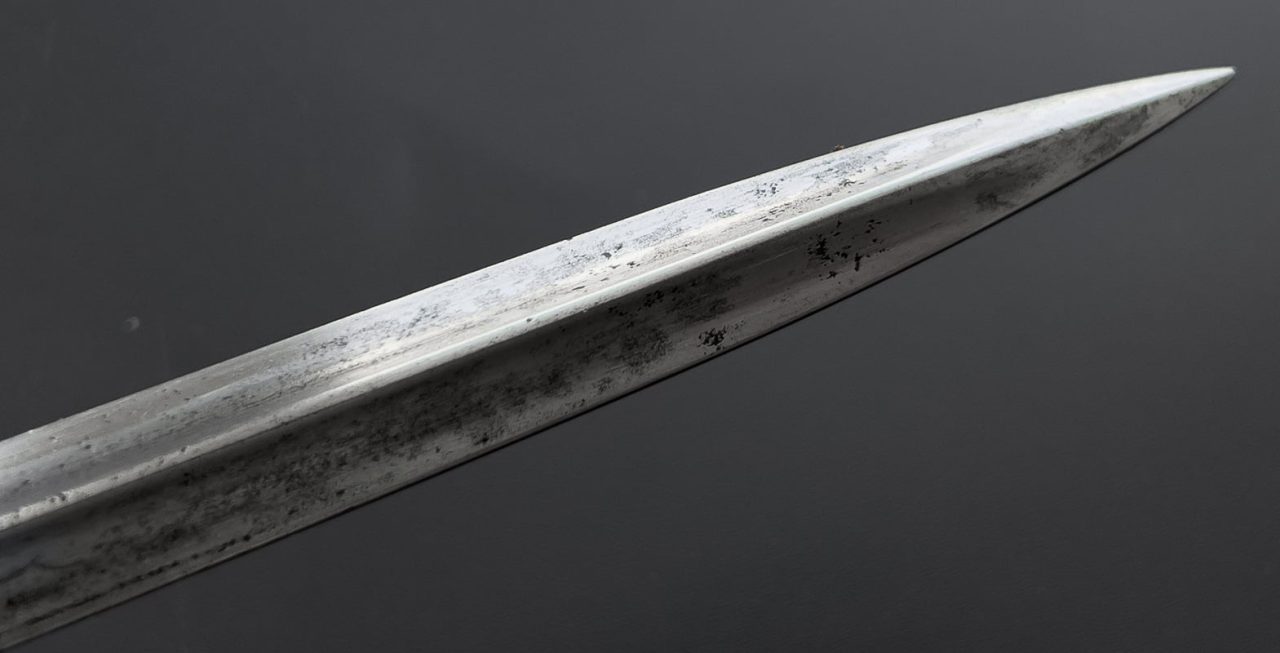
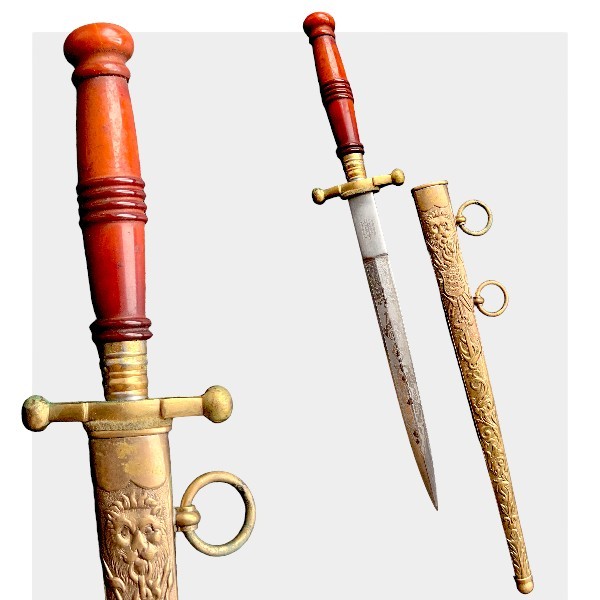
Steel blade, straight, needle-type, four-edged, with doles in each edge, nickel-plated.
The hilt consists of a hilt and crossguard and a grip.
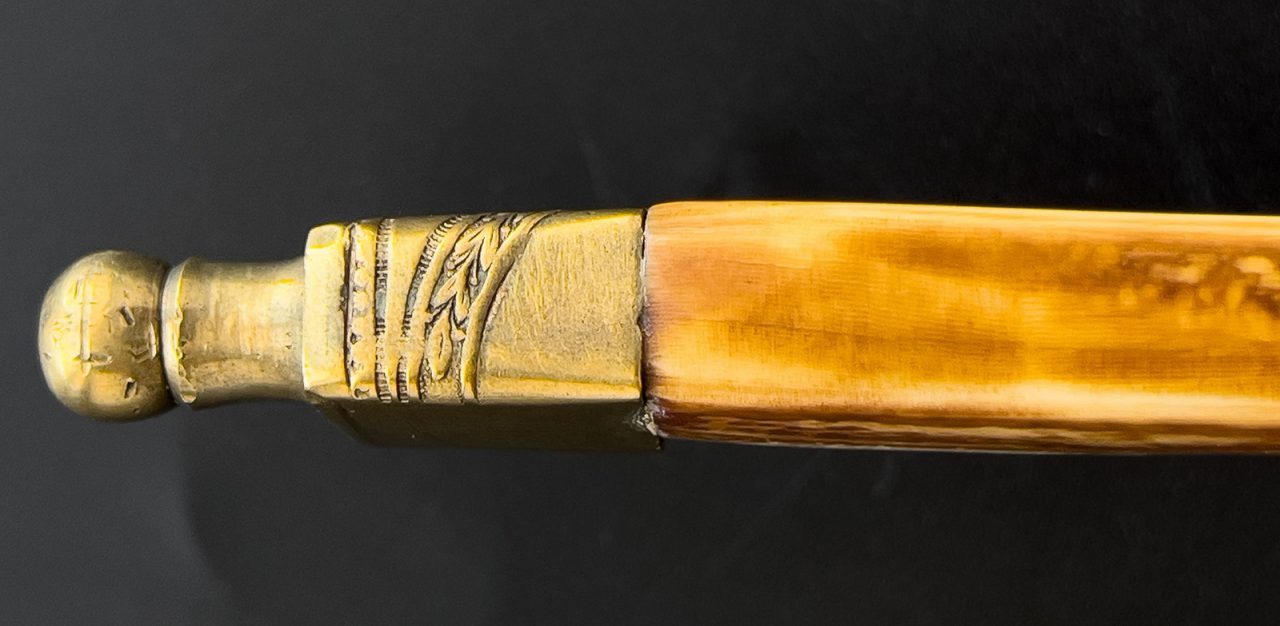
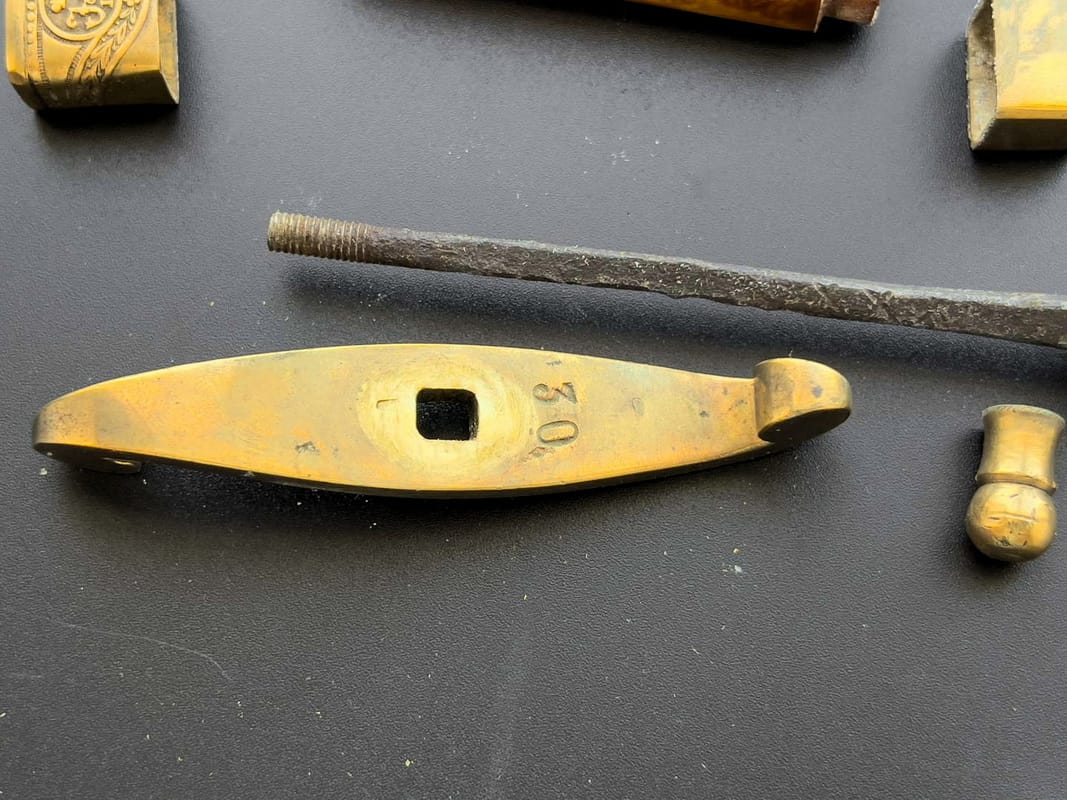
The handle is bone, rectangular in cross-section. The garda is brass, with ends bent in different directions. The upper sleeve of the hilt is decorated with the monogram of Emperor Nicholas II, during whose reign the officer received his first officer rank. The shank of the blade is fastened with a rounded twist. All brass parts are gold-plated.
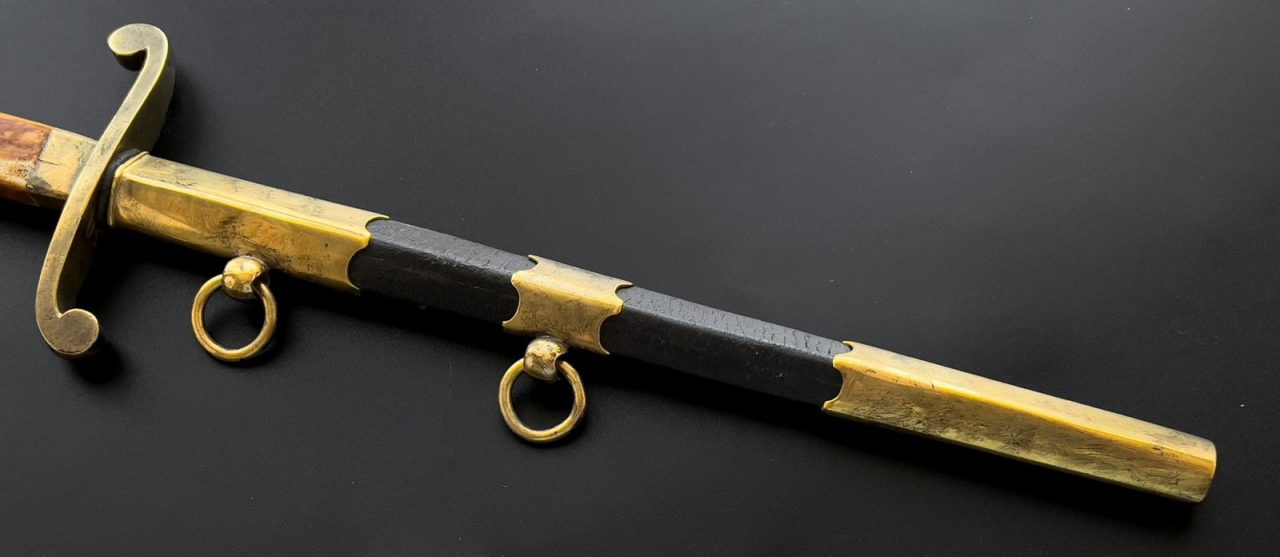
The scabbard is wooden, covered with leather. The device of the scabbard is brass, it consists of a mouth with a ring for a harness, a nut with a ring and a lug.
Historical Background:
The Russian officer’s naval dirk of the 1803/1914 model is an iconic symbol of the officers of the Imperial Russian Navy. The first official pattern was approved in 1803, and was updated in 1914 for use during World War One. For more than a century, these dirks remained an official part of the ceremonial uniforms of naval officers.
The navy of the russian Empire played a key role in many historical battles, such as the defense of Sevastopol during the Crimean War, as well as in various conflicts at sea during the First World War. The dirks used during this period were made of high quality materials, particularly steel and brass, and were often decorated with Imperial Navy symbols, including the image of the double-headed eagle and anchor symbols.
After the accession to the throne of Emperor Alexander I, a series of significant reforms began in russia, including in the navy, which lasted about 25 years. One of the key reforms was the reform of fleet management, announced in the Manifesto of September 8, 1802, according to which the Ministry of Naval Forces was created. The Admiralty Board, which had existed since 1717, became part of it as part of the new structure.
The reforms also affected the appearance of sailors. In 1801, new uniforms were introduced, which completely changed their appearance. In 1803, according to decree No. 20743, officers of the fleet were allowed to wear dirks: “On working days, allow everyone to wear dark green pantaloons and dirks…”. This decree allowed midshipmen to wear dirks, but this right was canceled two years later and then returned again in 1807. The reforms also affected the appearance of sailors. In 1801, new uniforms were introduced, which completely changed their appearance. In 1803, according to decree No. 20743, officers of the fleet were allowed to wear dirks: “On working days, allow everyone to wear dark green pantaloons and dirks…”. This decree allowed midshipmen to wear dirks, but this right was canceled two years later and then returned again in 1807.

It is important to note that the documents of that time do not make it clear what type of dirk was adopted in 1803. However, it was the first official act that mentions the dirk as a mandatory element of the uniform of naval officers. The term “dirk of the 1803 pattern” has gained a foothold in the literature, although there is no direct evidence of its approval in that year.
Despite the lack of precise information about the appearance of dirks in the first quarter of the XIX century, it is known that in 1811 the sword of naval officers was replaced by a saber with a curved blade and a characteristic hilt. Dirks remained part of the everyday uniform, and their appearance varied: from short to long, with straight and curved blades, diamond-shaped or polygonal sections, hilt with a shackle or cross.
Manufacturing of dirks in the late 18th – early 19th century took place both at armory factories and in private workshops. However, the most widespread were dirks with straight blades and crosses. Some examples of dirks with curved blades contain the monogram of Emperor Alexander I, which testifies to their use in the period of 1801-1825. It is possible that in 1803 only legalized the right to wear dirks, leaving the choice of model at the discretion of owners until the mid-1820s.

On April 14, 1826, the Maritime Ministry approved the “Regulations on the naval uniform”, in which it was ordered to wear dirks approved.
More information about the russian officer’s naval dirk H2 CAR model 1803/1914 at the link:
Photo Review:










| Collection | |
|---|---|
| by dating | |
| by country and region | |
| by type | |
| by type of troops |
Add a review
Be the first to review “Russian officer’s naval dirk H2 CAR of 1803/1914 pattern”
Related products
-
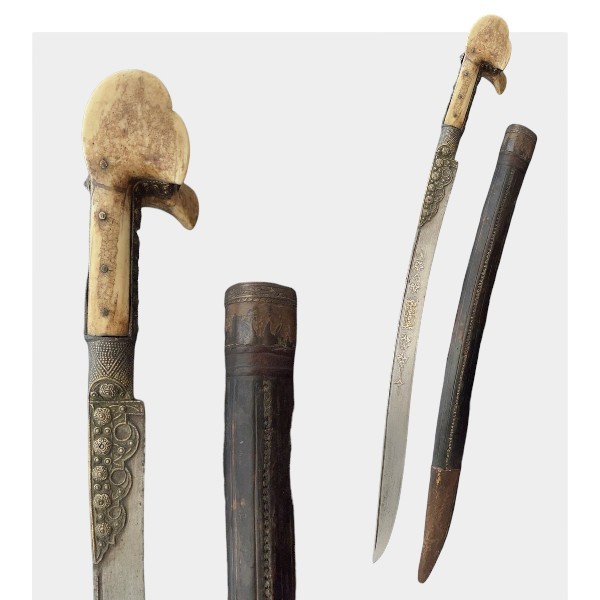
Yatagan of the Ottoman Empire with the inscription: “O Muhammad, be my assistant.” 1824
Original price was: 4,250 $.3,749 $Current price is: 3,749 $. -
Sword for officers of all branches and administrations model 1872
Original price was: 620 $.600 $Current price is: 600 $.













Updating…
There are no reviews yet.