

Antique Turkish Shamshir/Kilij with silver fittings, crafted in Kyiv, Ukraine. Go to the photo albumPhotos of the lot on offer are at the very bottom


Turkish Shamshir/Kilij in Silver
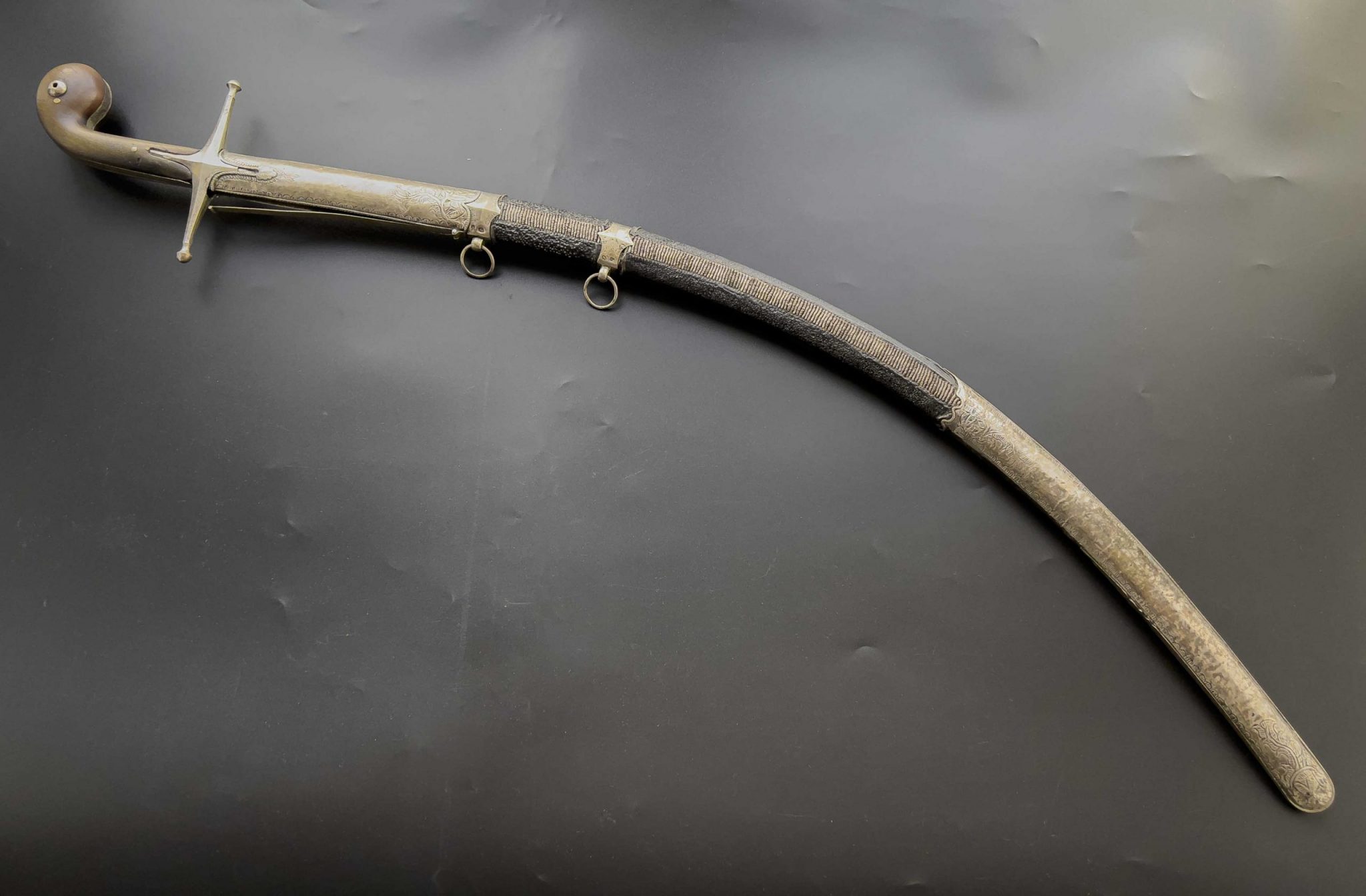
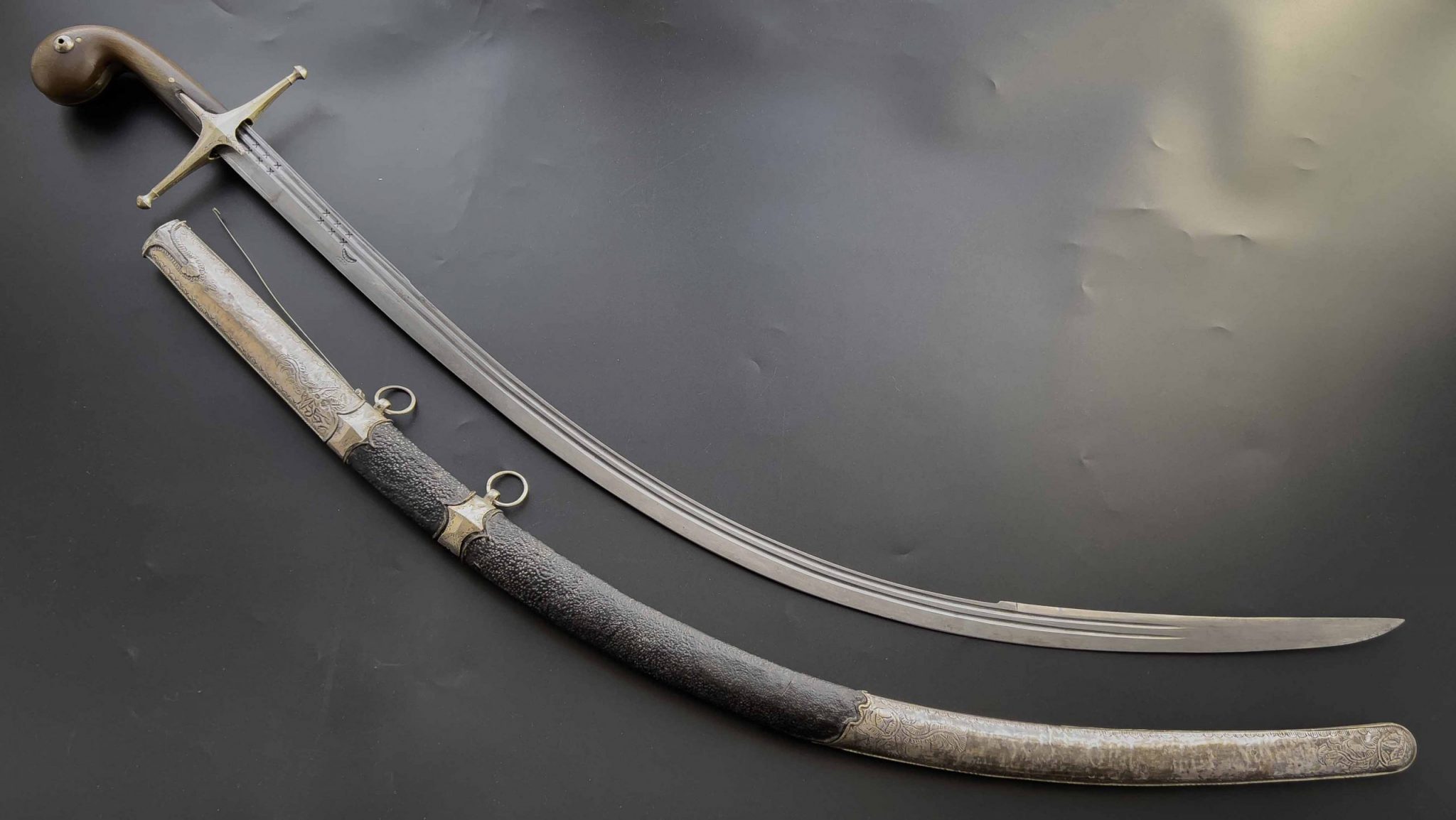
For purchase as a gift or for collection, we present the Turkish Shamshir/Kilij with a silver handle made of horn, crafted in Kyiv, Ukraine.
Manufacturer: Unknown.
Country: Ottoman Empire; judging by the hallmarks, the silver was produced in Egypt.
Dating: Period of the reign of Abdulmejid I (1839-1861) or Abdulaziz (1861-1876).
Condition: 8/10, signs of wear, cracks, polishing.
Completeness: The sword comes with a scabbard.
Dear collectors and visitors of the Antique Gallery looking for gifts, particularly antique weapons, we present to you: the Turkish Shamshir/Kilij in silver from the 19th century, similar to the sabers that Ukrainian Cossacks carried in the 16th-17th centuries, as evidenced by paintings from that period.
KILIJ OR OTTOMAN SHAMSHIR?
Before you is an exceptionally interesting sword with excellent preservation, yet it raises many questions regarding its type, production features, and history.
Sometimes similar swords are referred to as Turkish shamshirs. The blade of a ‘standard’ shamshir is narrow with a significant curve (ranging from 4 cm to 25 cm or more), which begins gently, almost from the hilt, although it sharply increases at a distance of 1/3 of the blade’s length from the tip.
Shamshirs can sometimes have a moderate, more gradual curve. To be fair, shamshir blades with slight curvature are also encountered.
What type of weapon do we have before us? Let’s try to figure it out.
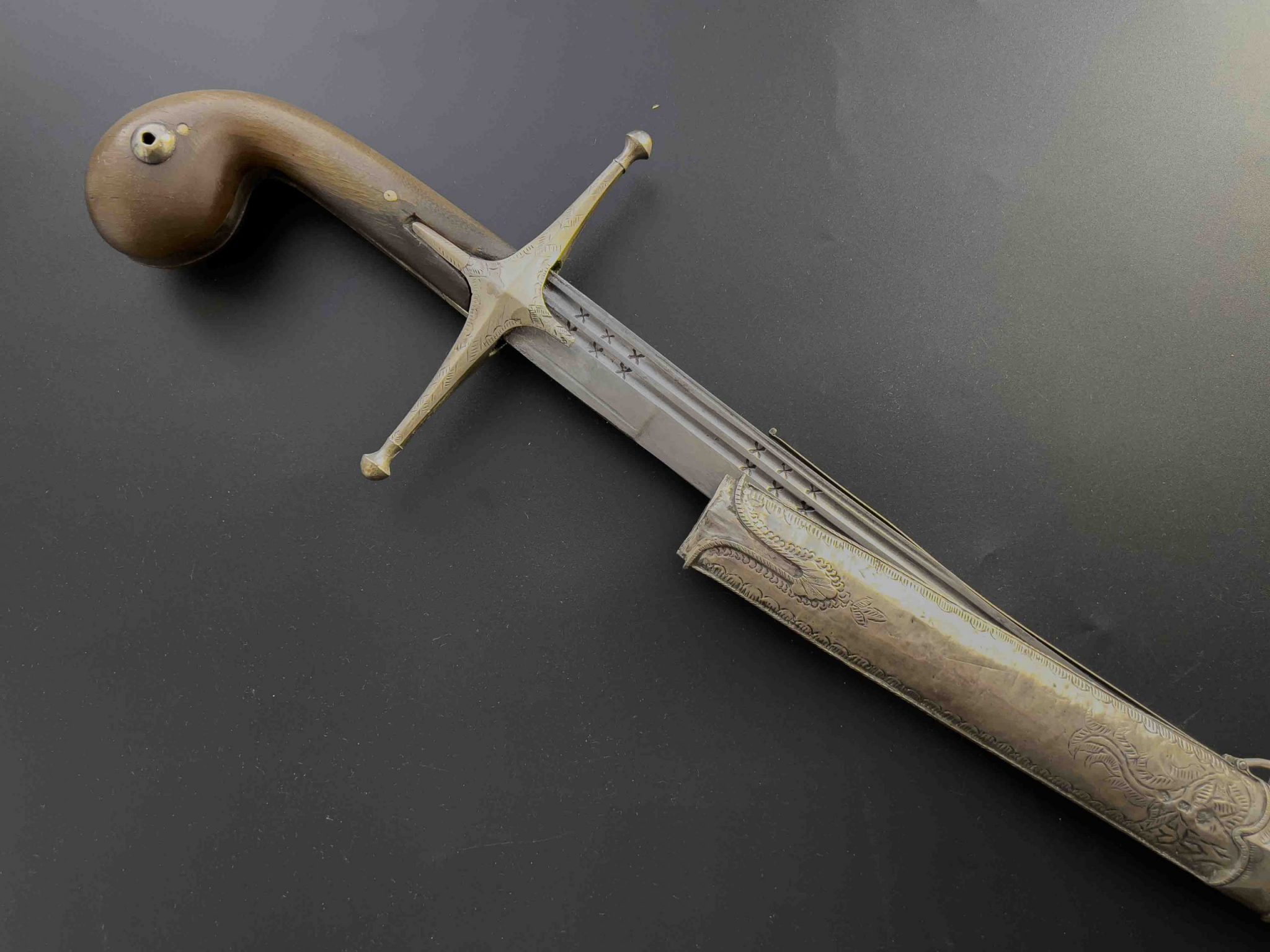
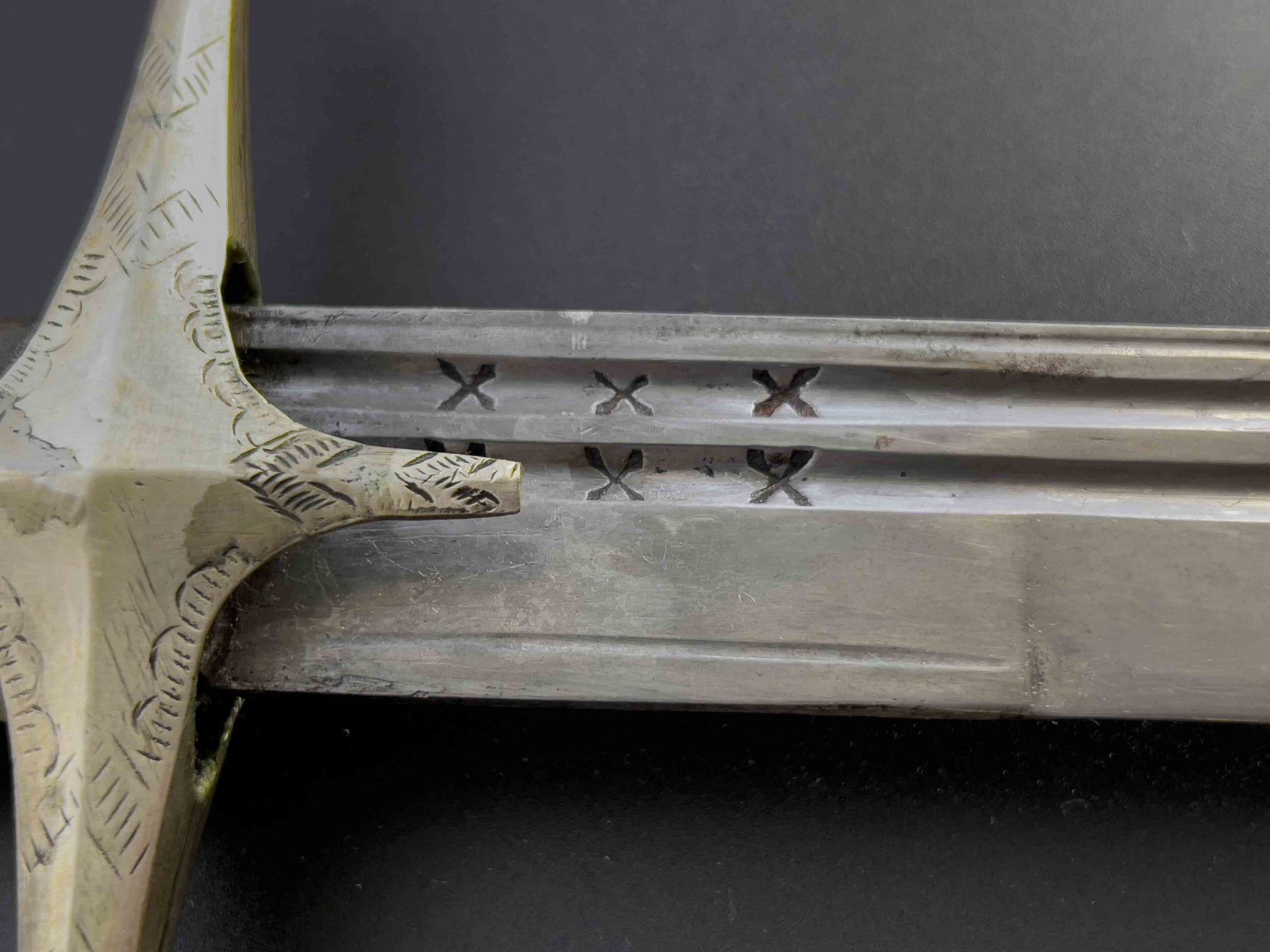
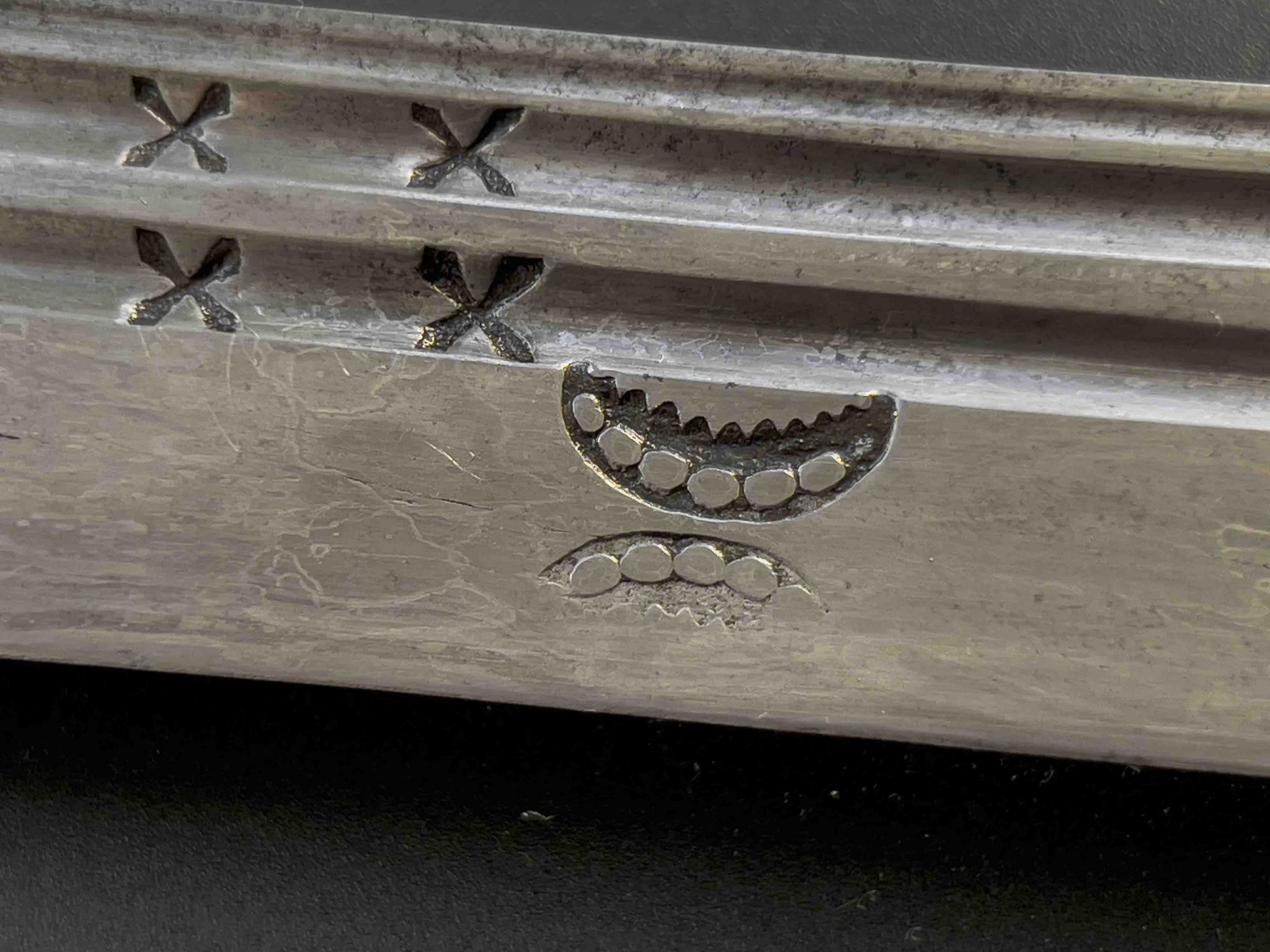
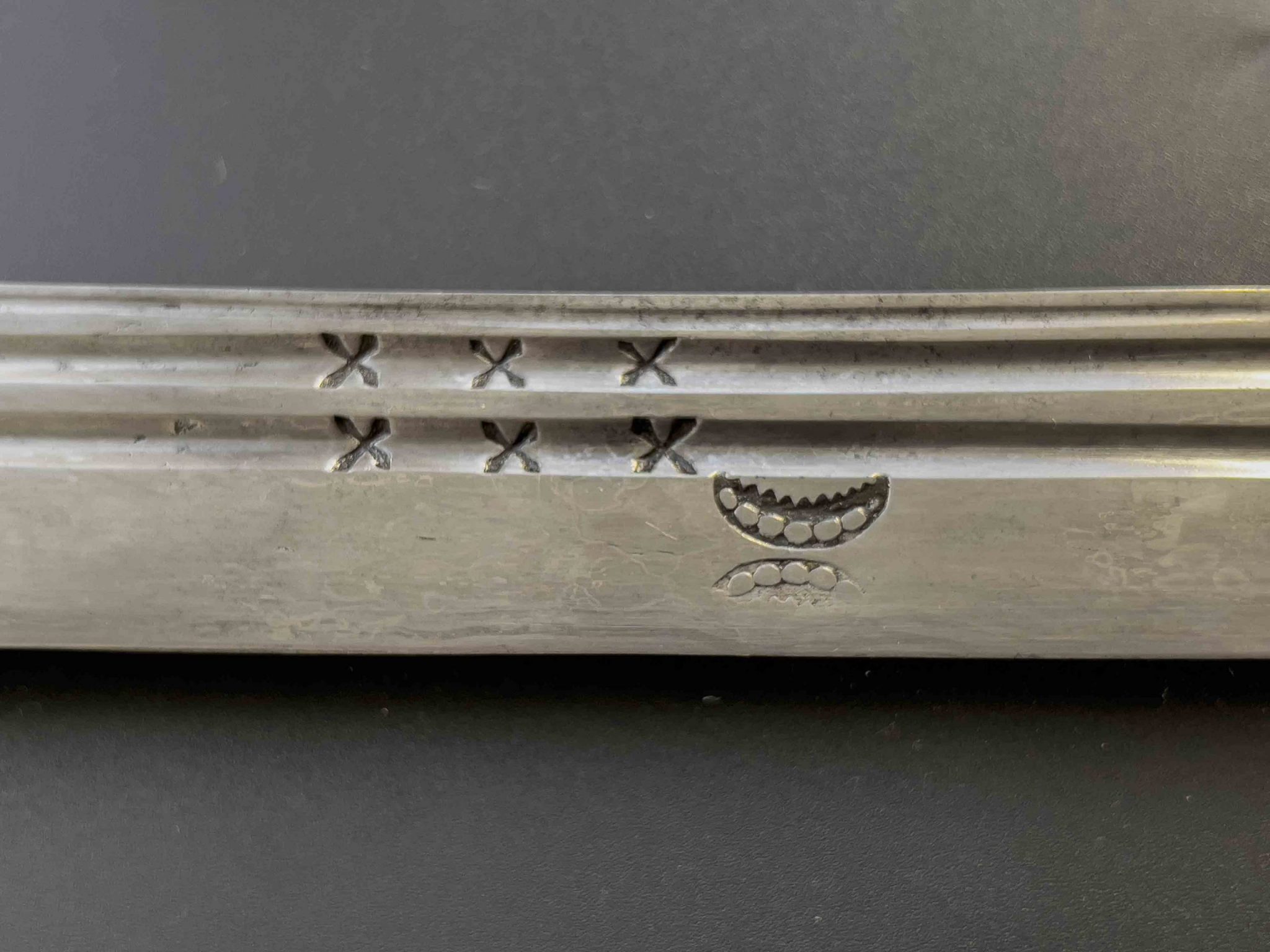
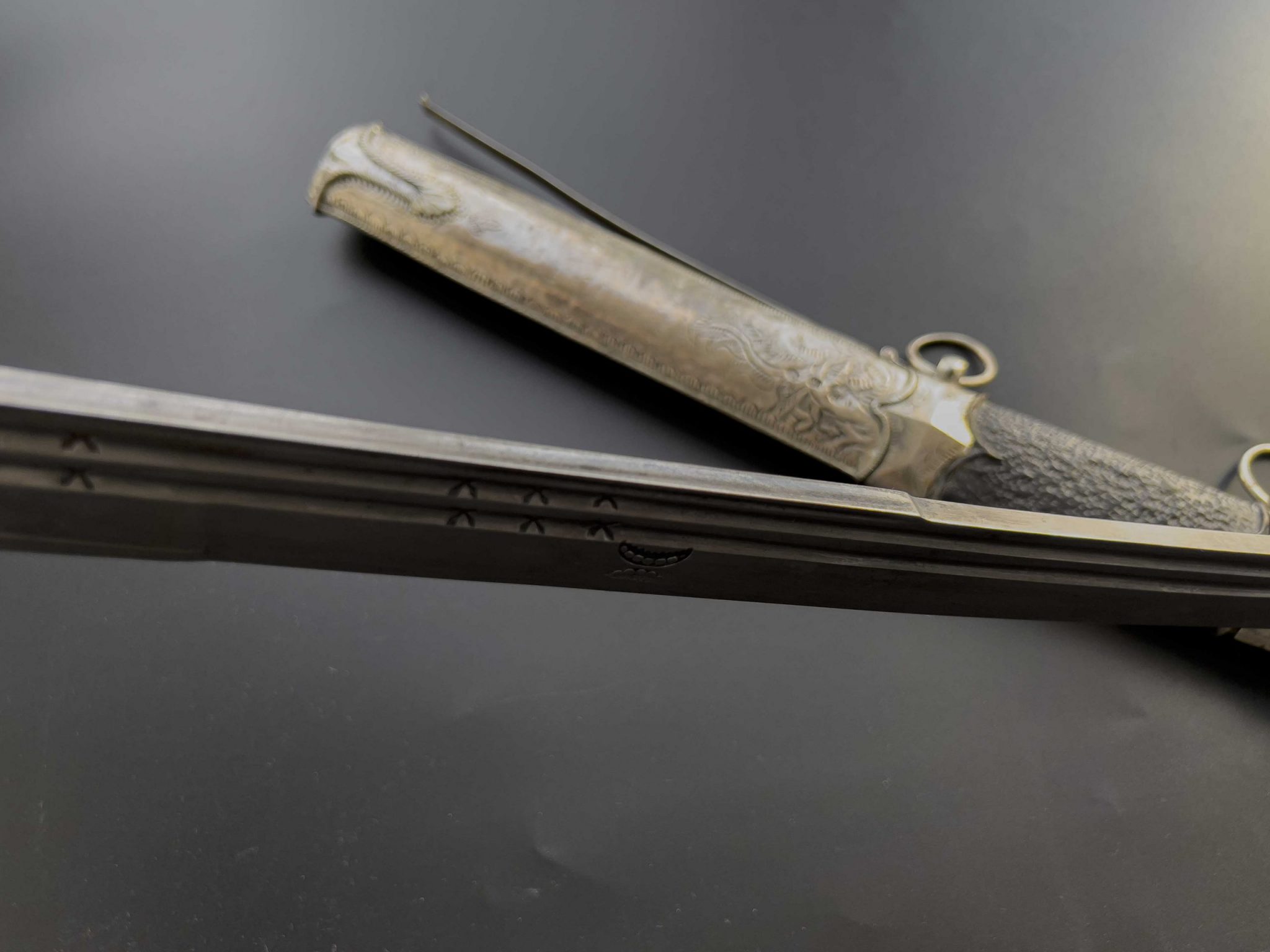
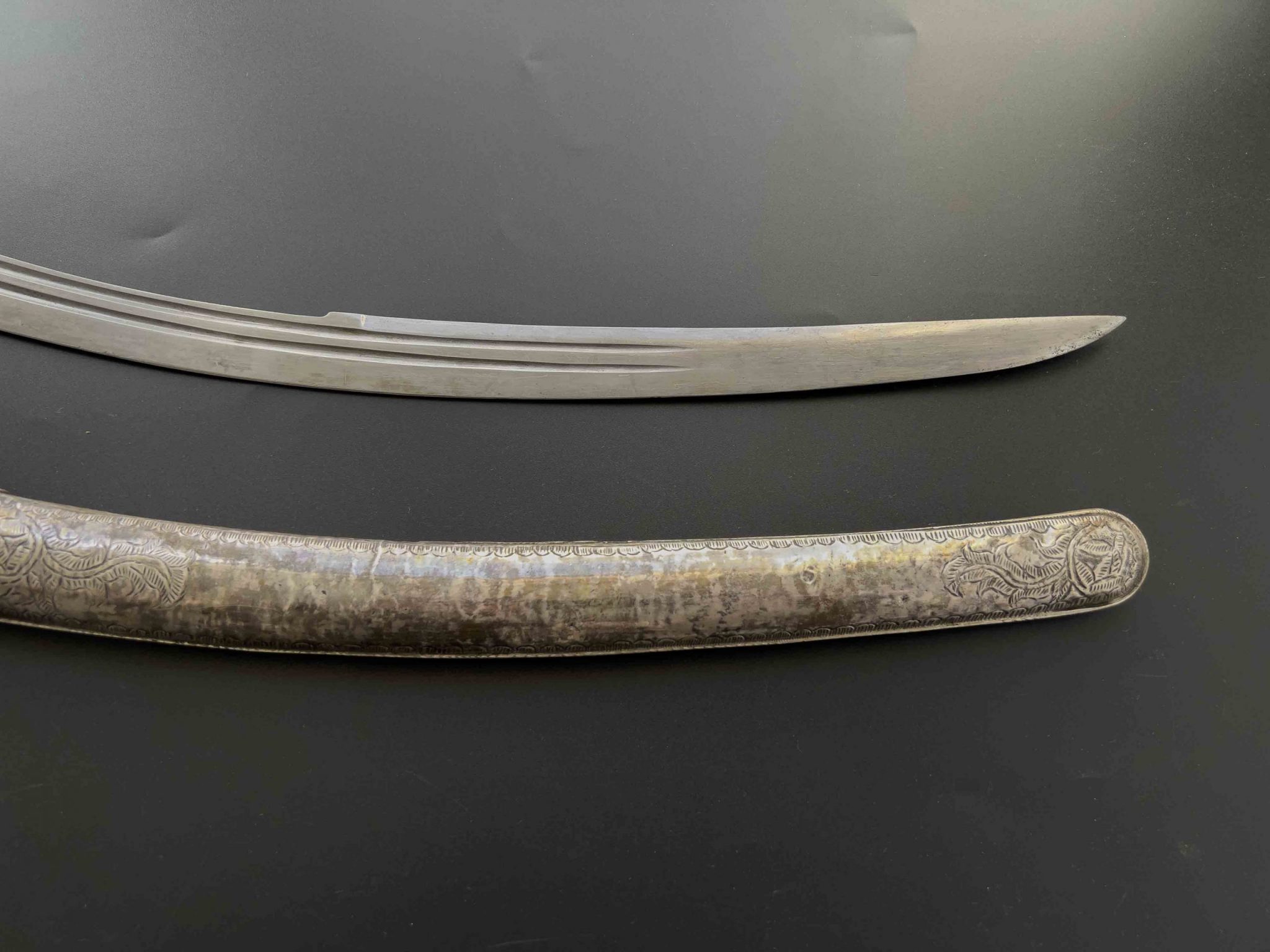
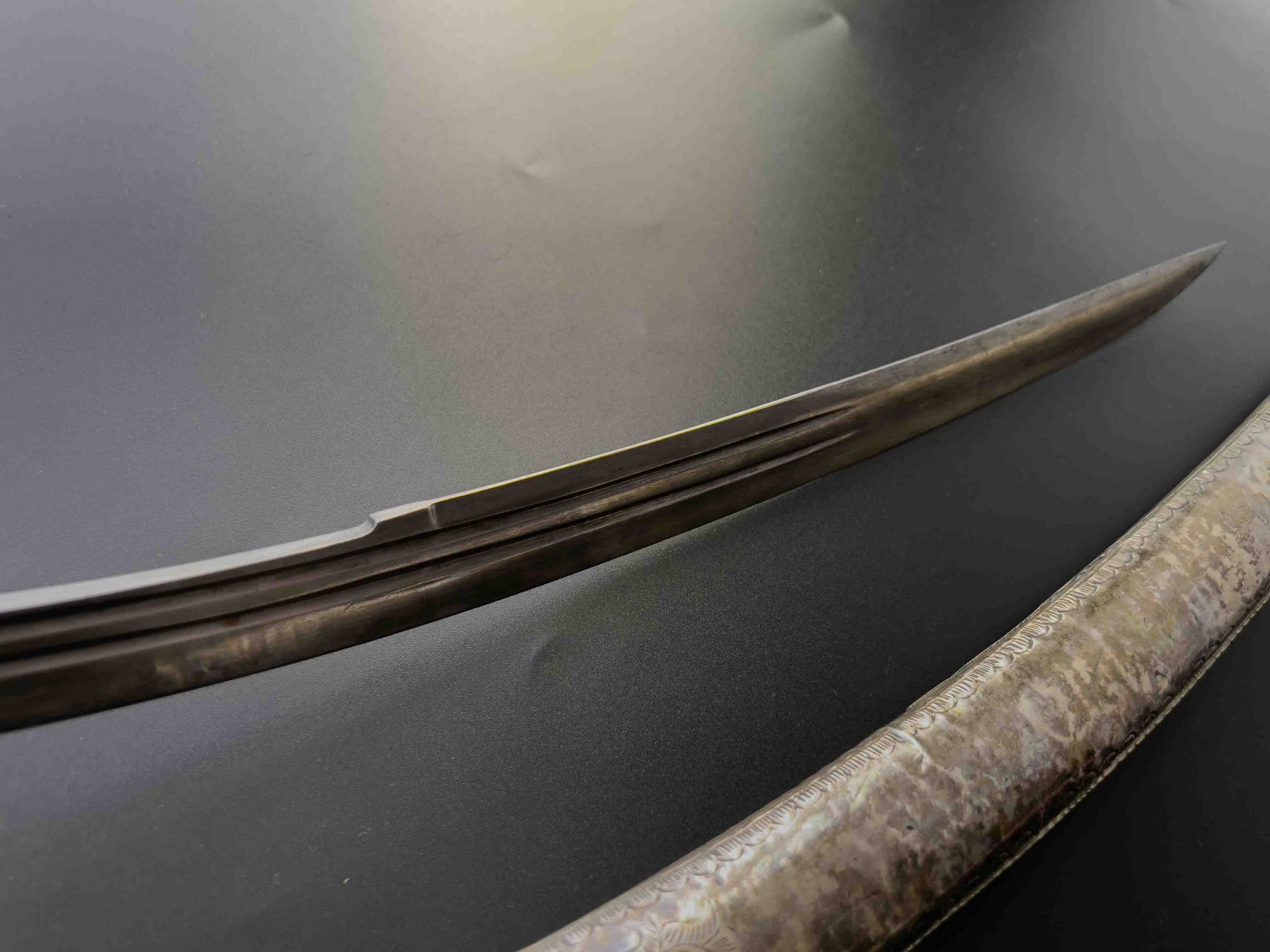
The blade of this sword is single-edged and has a considerable curve. Two parallel grooves are selected for 2/3 of its length, and a long fuller occupies about a quarter of the blade’s length. The ‘strong’ part of the sword begins with a small unsharpened section on the blade’s side. In this part, two groups of stamps are engraved, each with six diagonal crosses and a characteristic pair of crescent-shaped stamps (the so-called gurdas). Additionally, the spine of the ‘strong’ part of the blade has a small channel (fuller). Between the ‘strong’ third and the fuller, the blade noticeably narrows. The tip is narrow, distinctly defined, and designed for thrusting.
Photo 4. GURDA stamp.
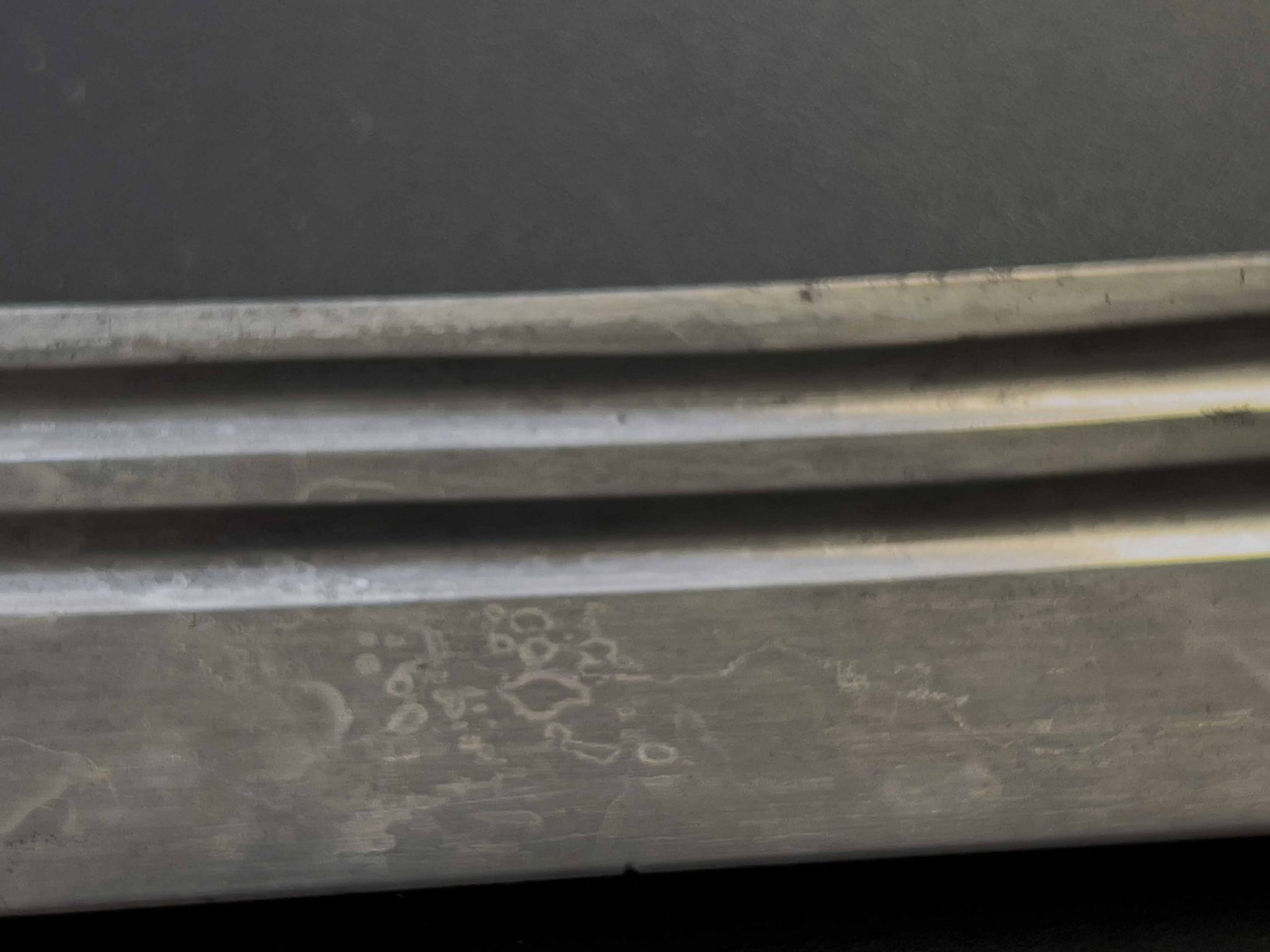
A noticeable texture of the Damascus pattern (judging by the drawing, the region of Damascus is “Rajasthan”).
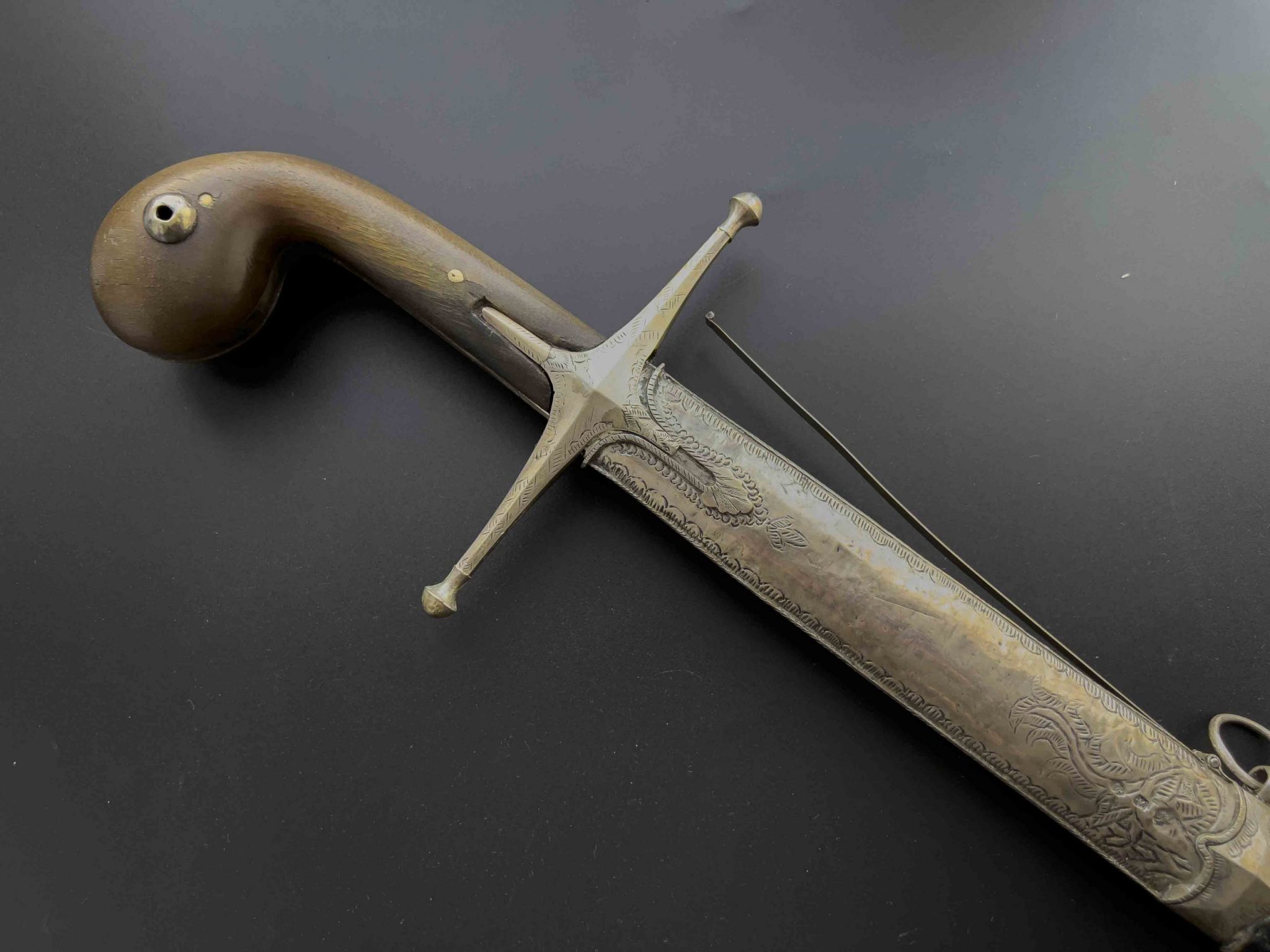
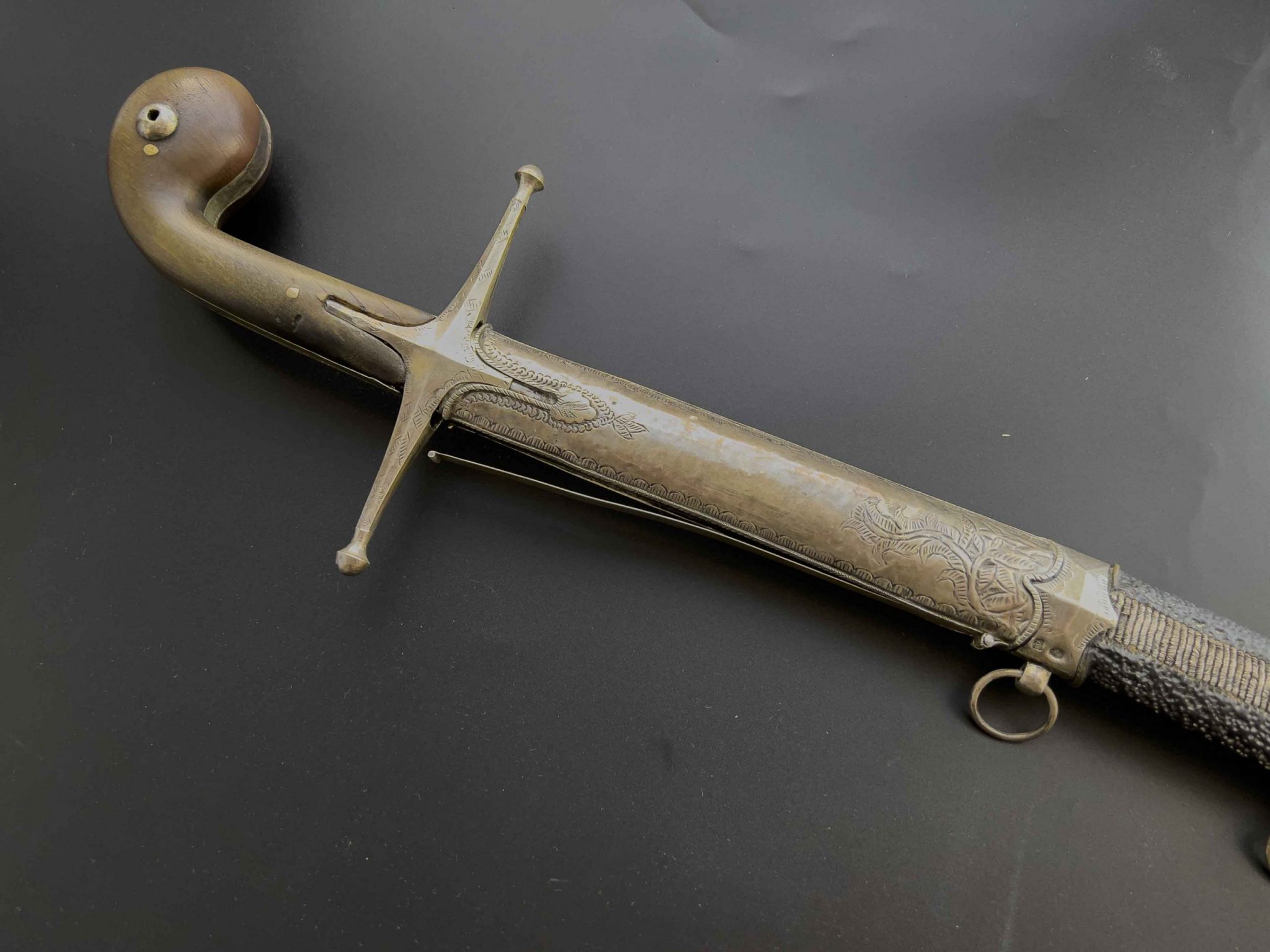
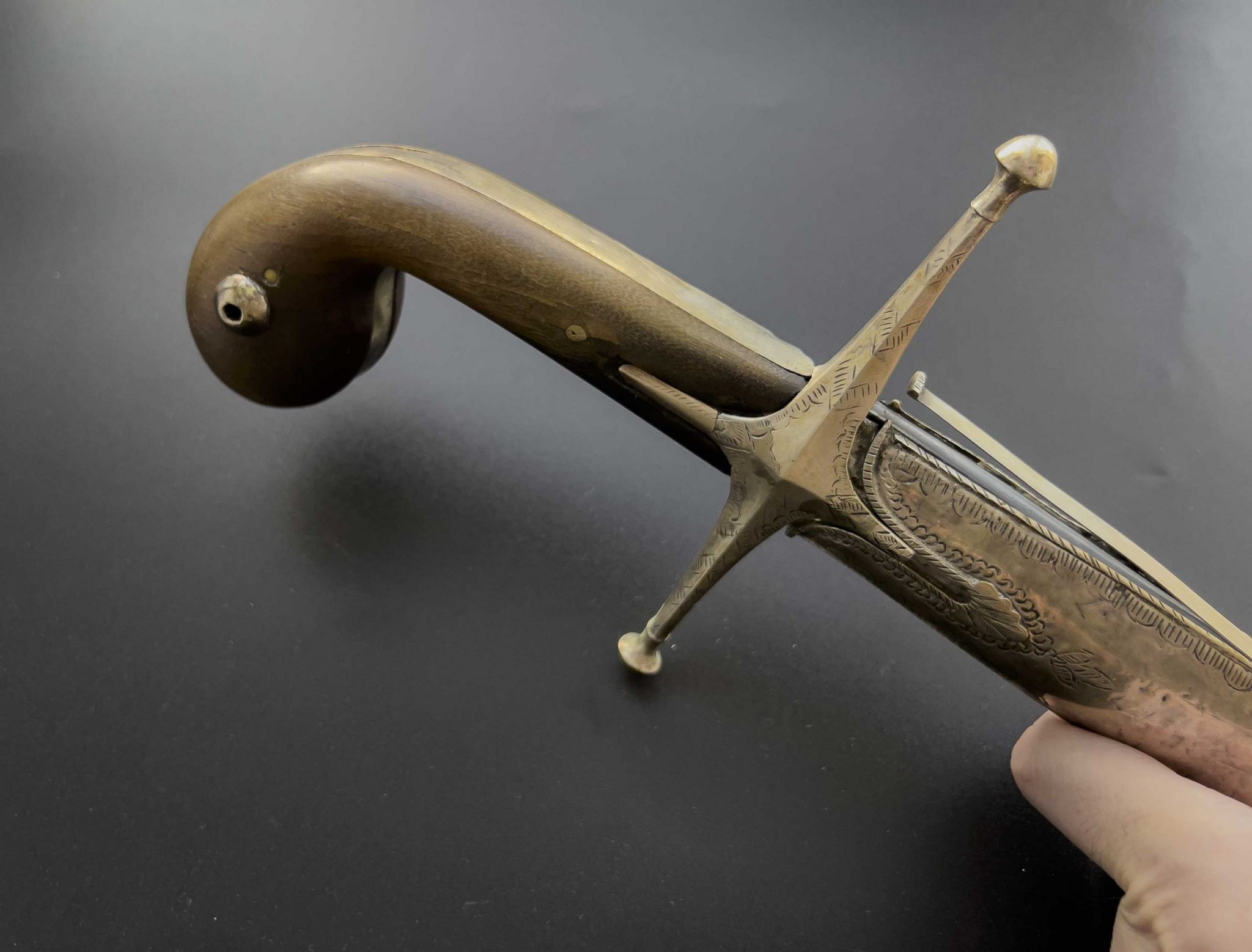
The hilt is of an open type with a cross-shaped guard, decorated with floral ornamentation. The pommel is faceted, ending with small beads.
The grips are made of horn, mounted on three rivets, two of which are copper alloy pins, while the third (at the top of the hilt) has a through hole for a lanyard. The pommel is typical for Ottoman sabers, pear-shaped, sharply bent at a right angle to ensure maximum grip retention.
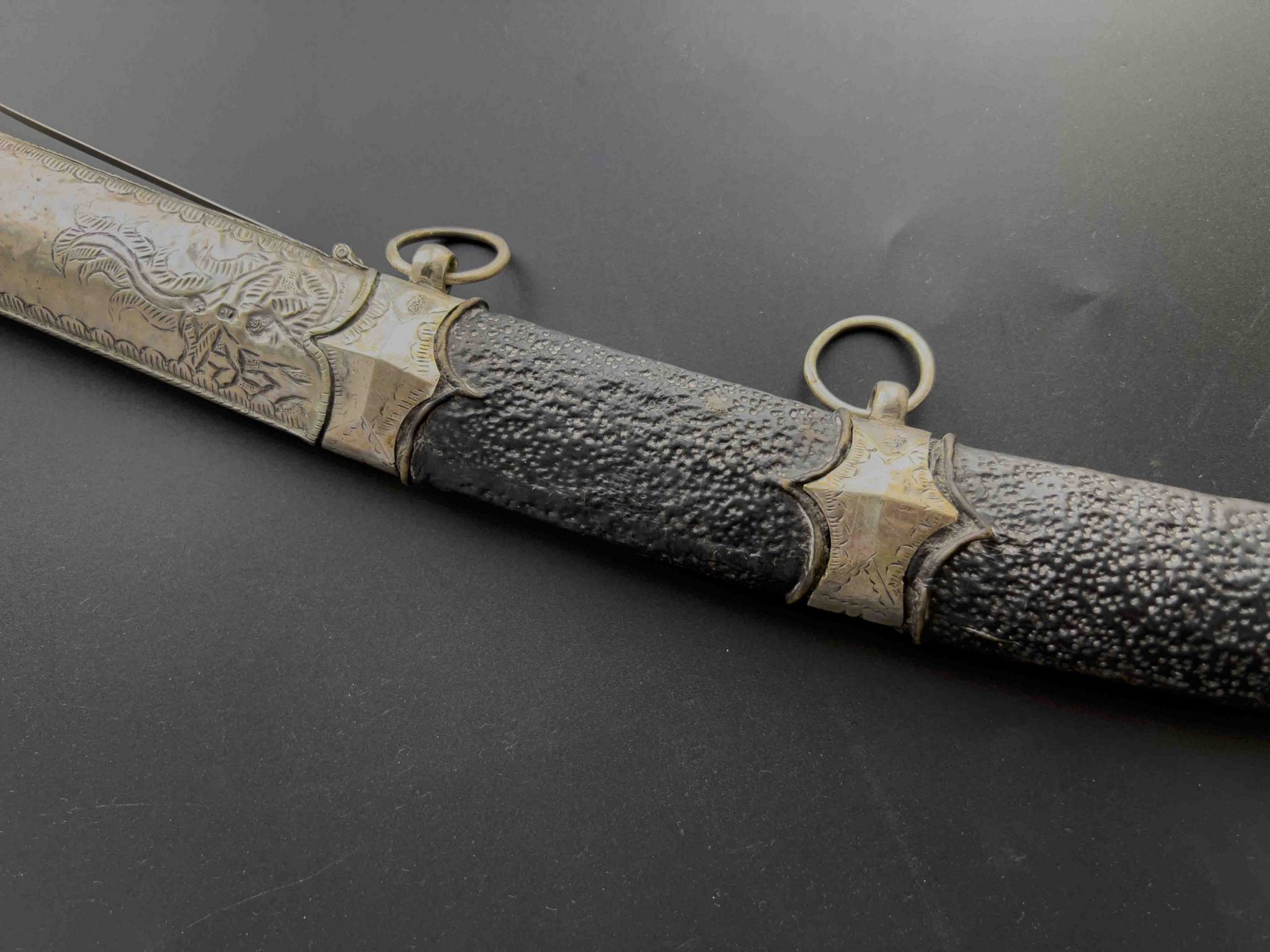
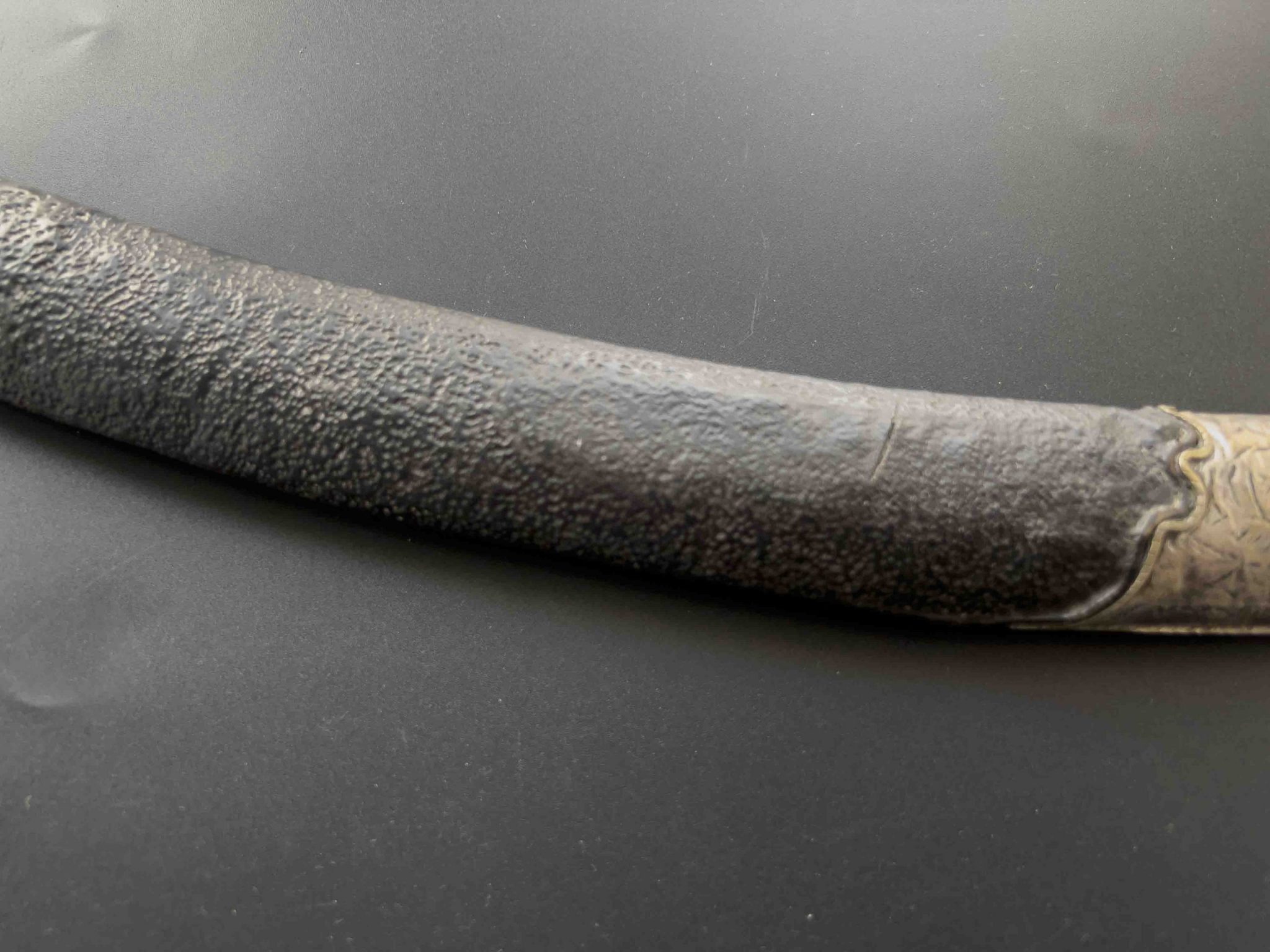
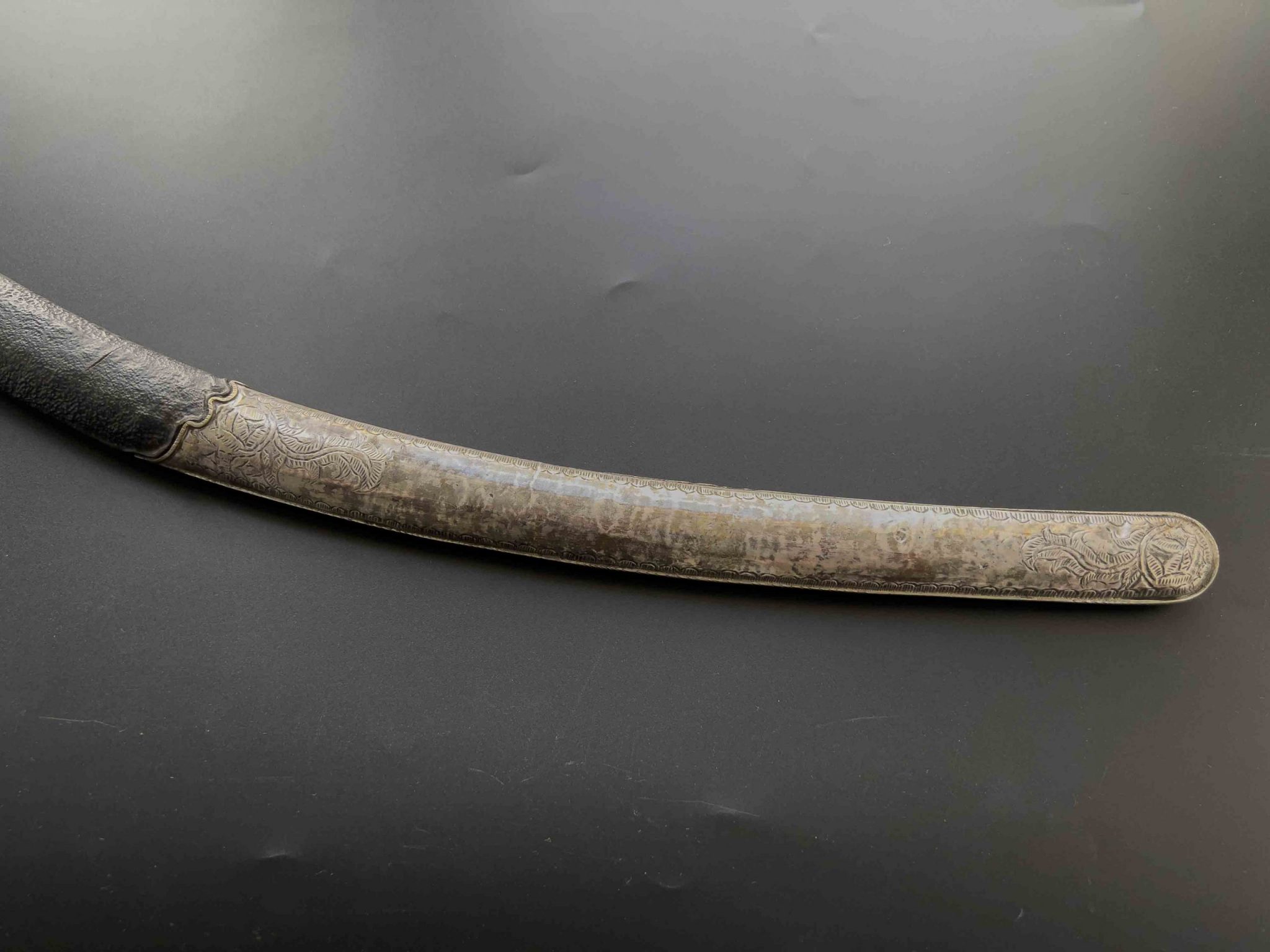
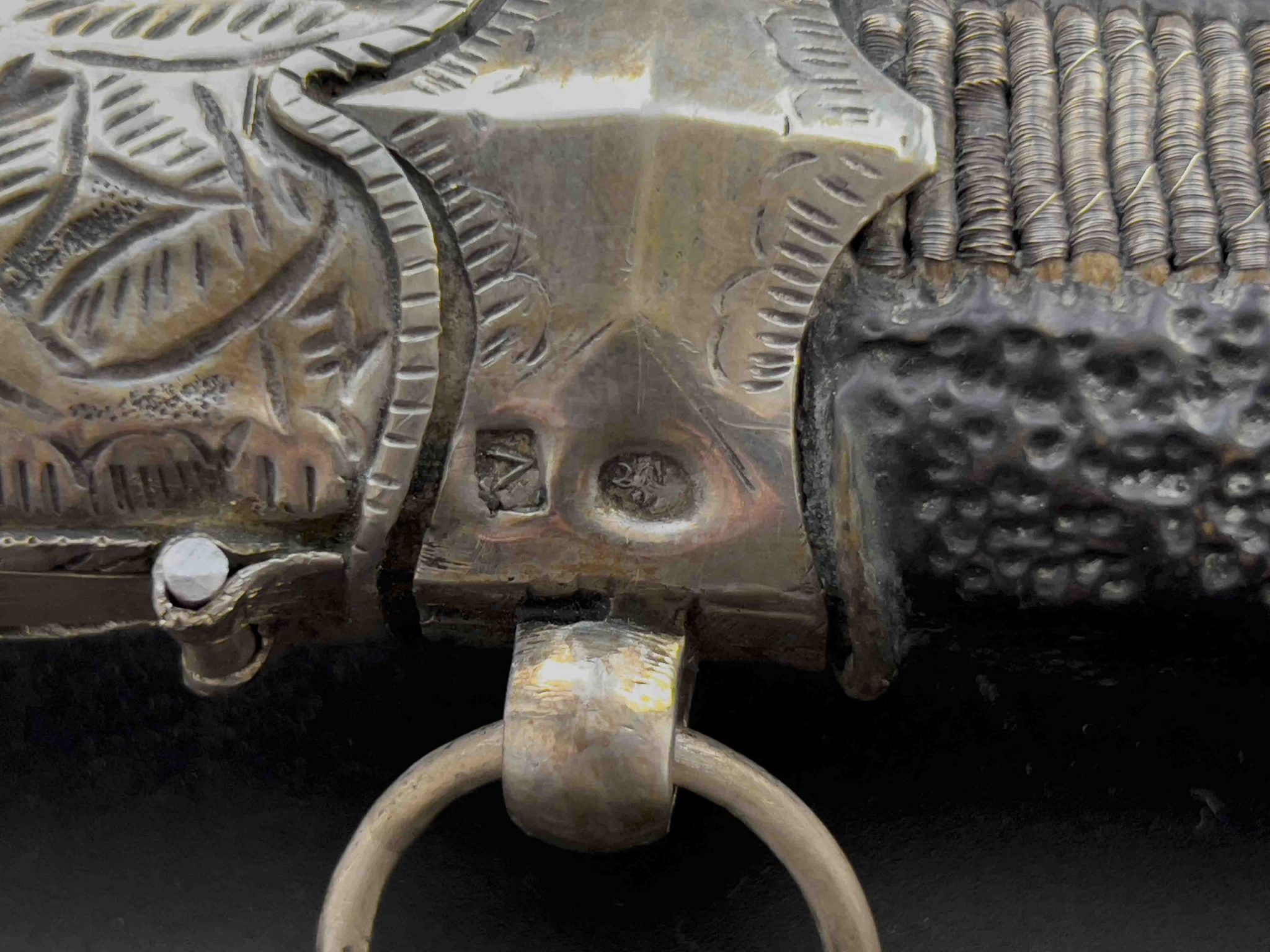
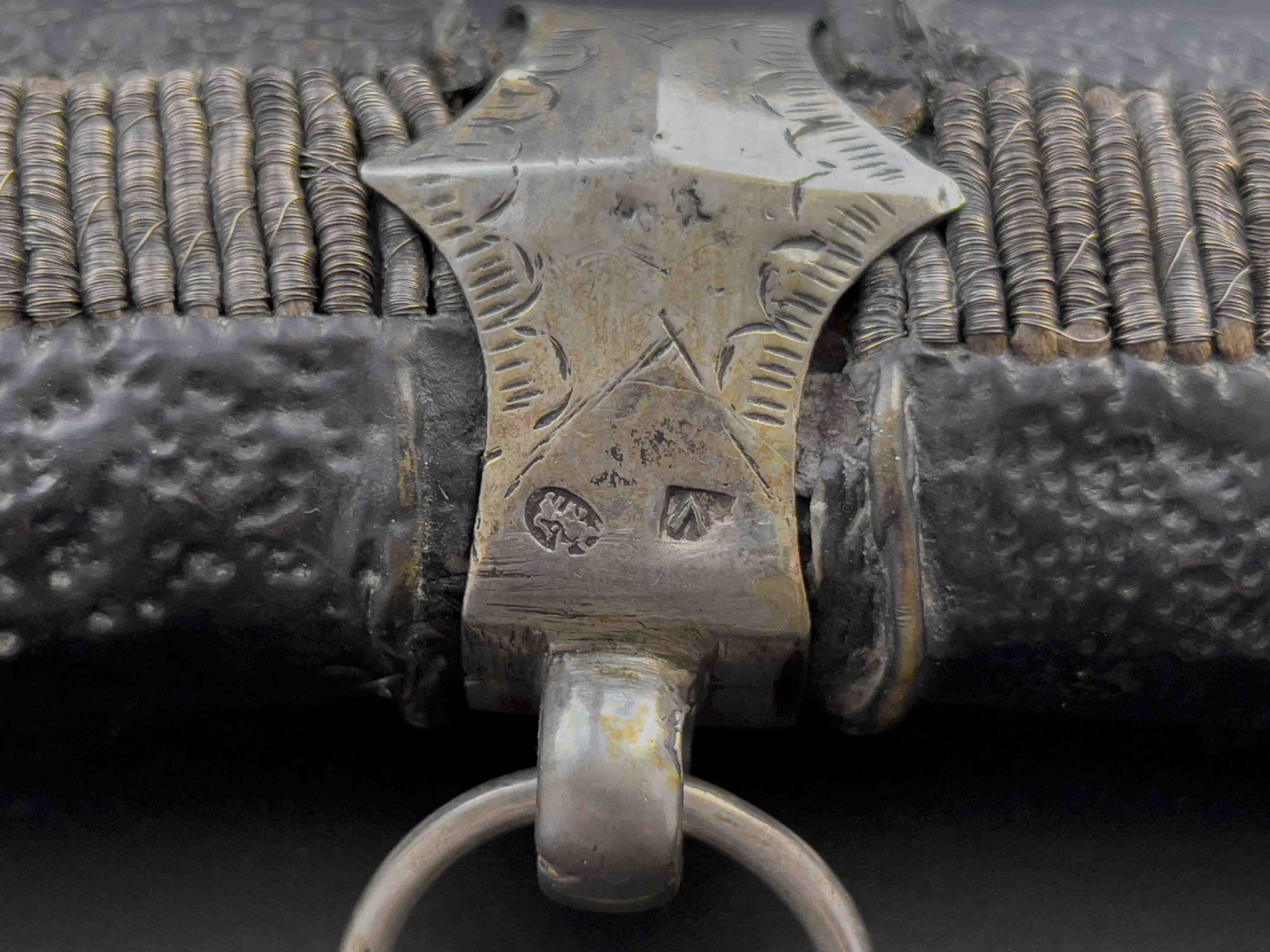
The scabbard of the sword is wooden, covered with black leather, with silver fittings sewn with silver wire between the details.
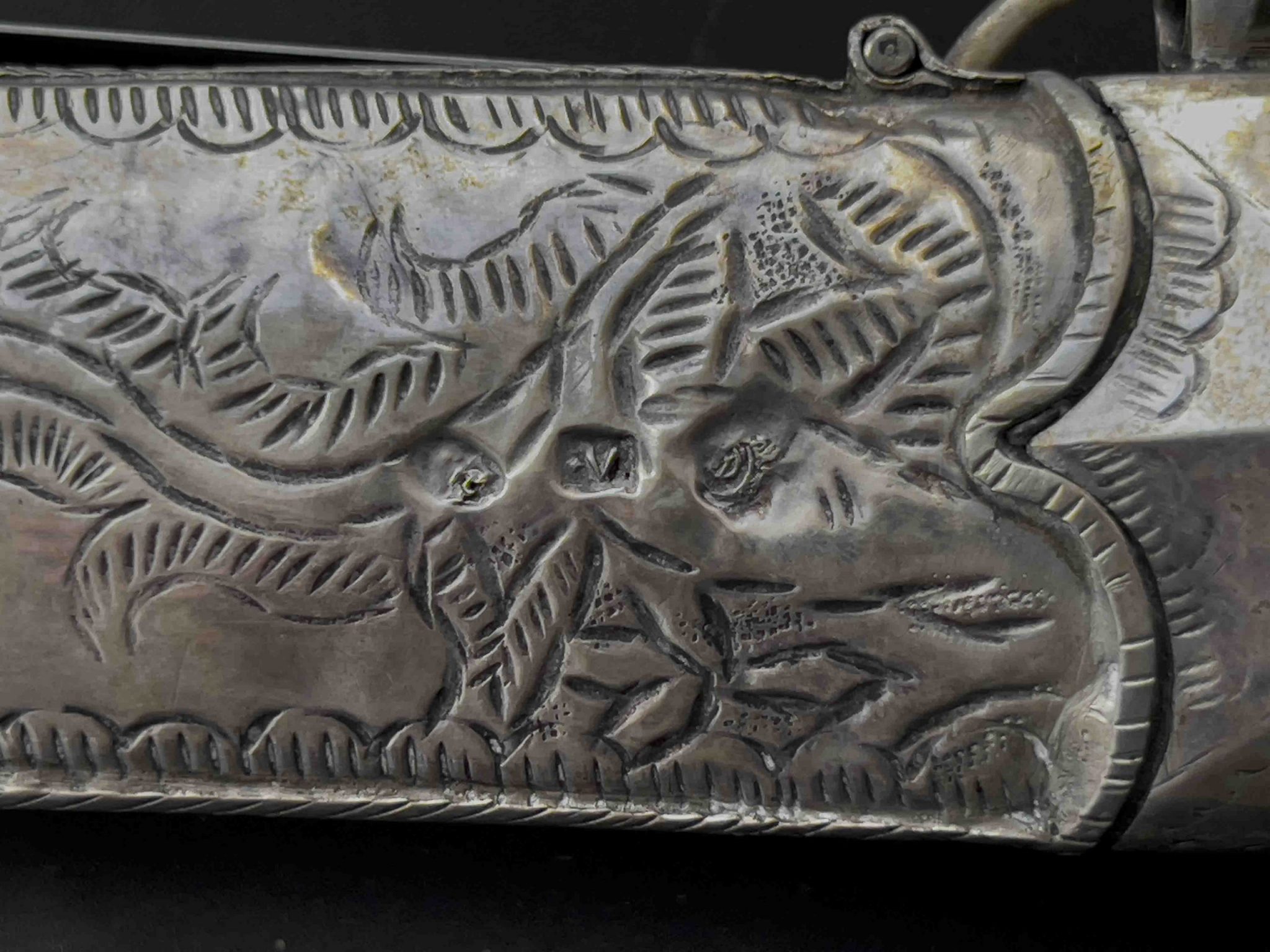
The throat, chape, and tip of the scabbard are silver, adorned with floral ornamentation.
A characteristic feature of Ottoman scabbards is the cut at the throat (along the spine of the blade), covered with a narrow metal plate. Its purpose is to facilitate the removal of the sword from the scabbard, considering the significant curve of the blade.
All silver details bear the stamps (tughra) of the Ottoman Empire, which relate to the reigns of Sultan Abdulmejid (1839-1861) or Abdulaziz (1861-1876).
Photo 5. Portraits of the sultans.
The sword witnessed an era of crisis and decline of the empire, numerous wars – the Bosnian (from 1831 with interruptions until 1862), Montenegrin (1852-1862), Crimean, the uprising on Crete from 1866-1869, and several later conflicts. Ultimately, European opponents of the Ottomans readily used Turkish sabers captured as trophies, bought, and gifted. The first owner could have been an officer of the sultan’s army, a regional militia, or insurgent formations.
So, what item do we have before us? The most accurate term for this sword would be a kilij with a smooth curve and a narrow blade. It is unlikely that it can be considered a variant of the shamshir.
In any case, this weapon is of high quality, masterfully crafted, and visually appealing. The leader of the Caucasian mountaineers, Imam Shamil, who lived during the time this beauty was created, said: “The boundary between truth and injustice is the edge of the sword.”
Go to the top of the ad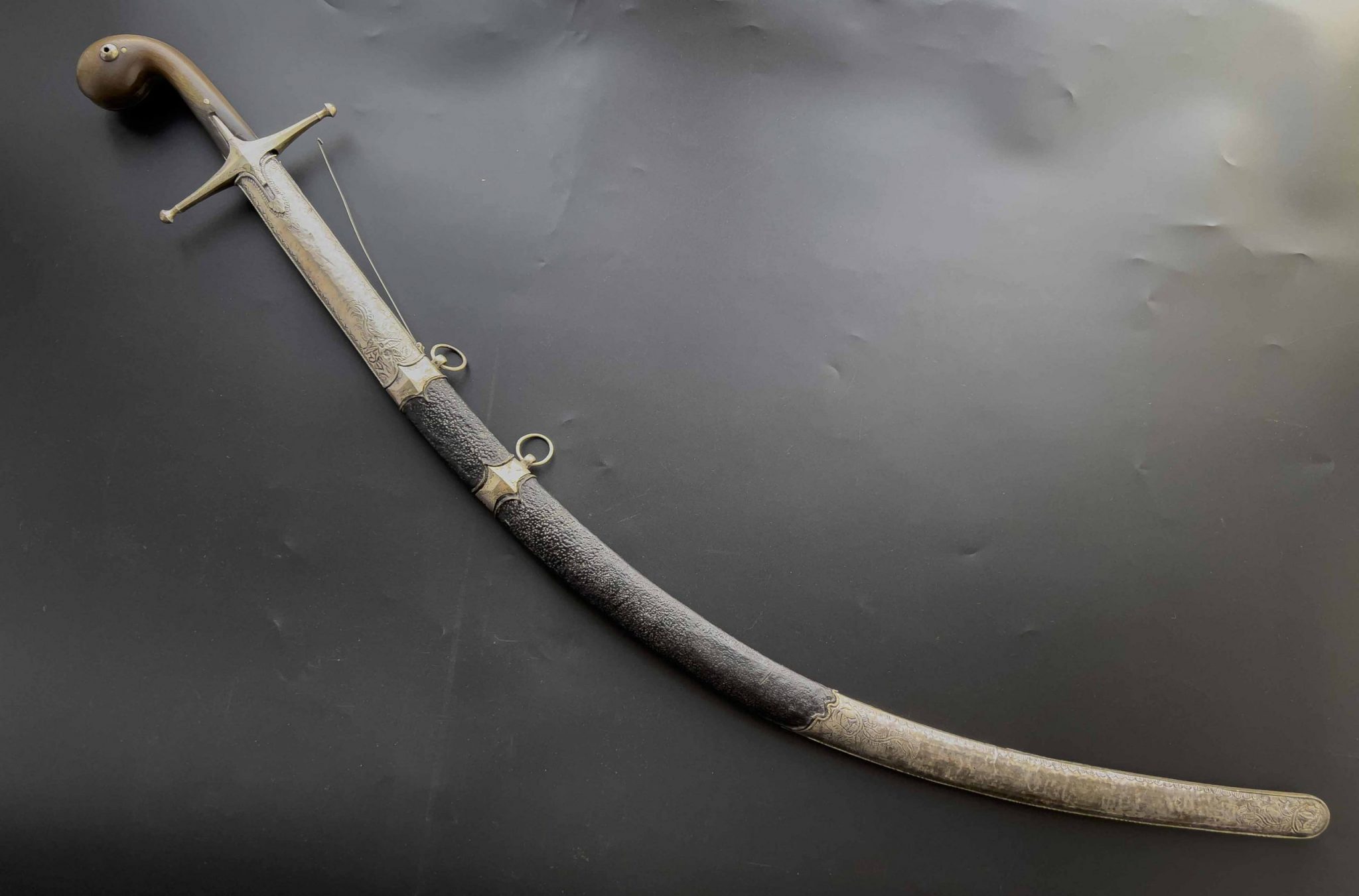


Add a review
Be the first to review “Turkish Shamshir/Kilij in Silver”
Related products
-
Sword for officers of all branches and administrations model 1872
Original price was: 620 $.600 $Current price is: 600 $.












Updating…
There are no reviews yet.